BIOGRAPHIES
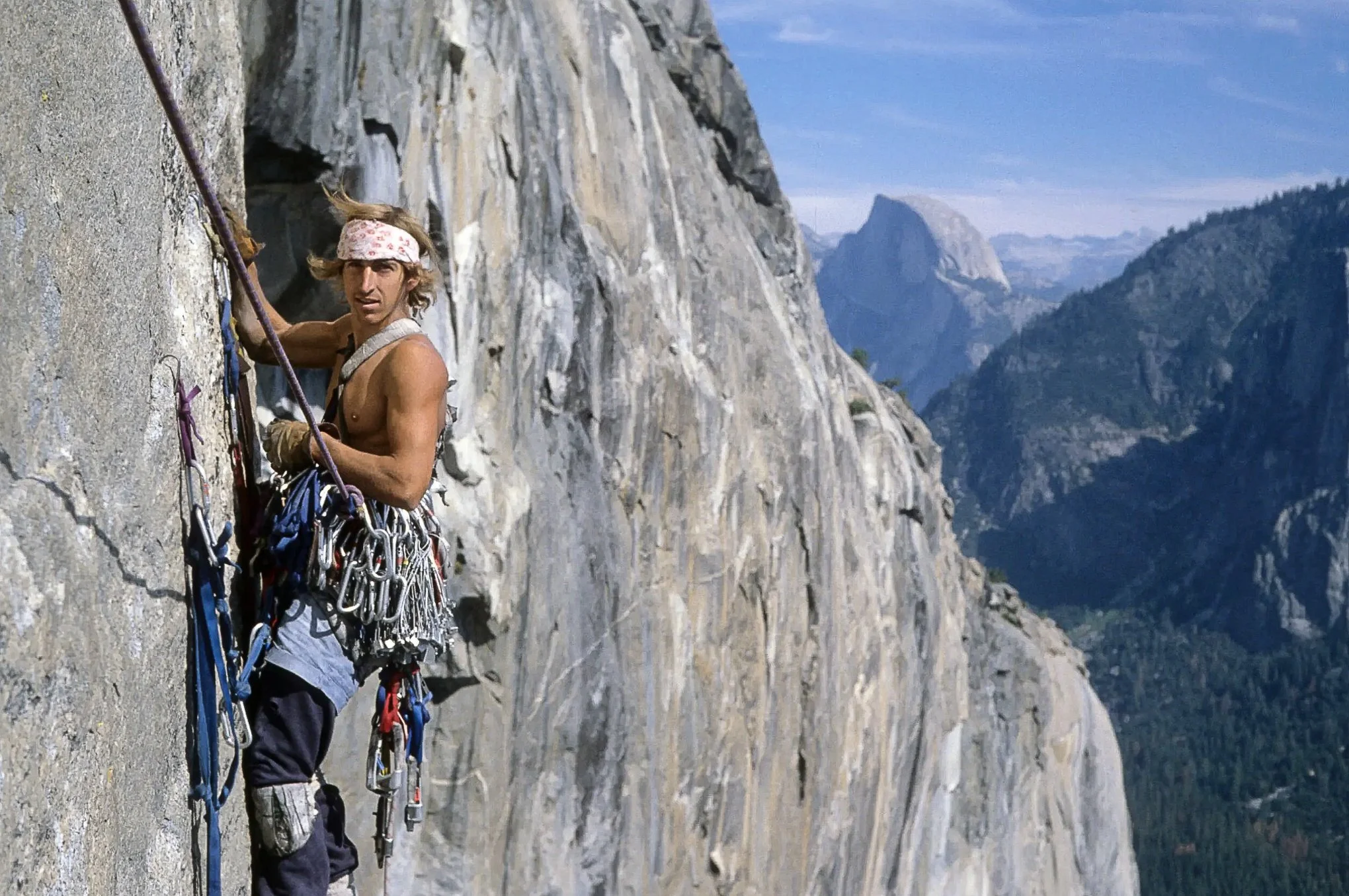
Dale Bard
A key figure of Yosemite’s “Stone Master” era, Dale Bard pushed the boundaries of big-wall climbing, becoming known as the “Crack Master” for his breathtaking ascents.
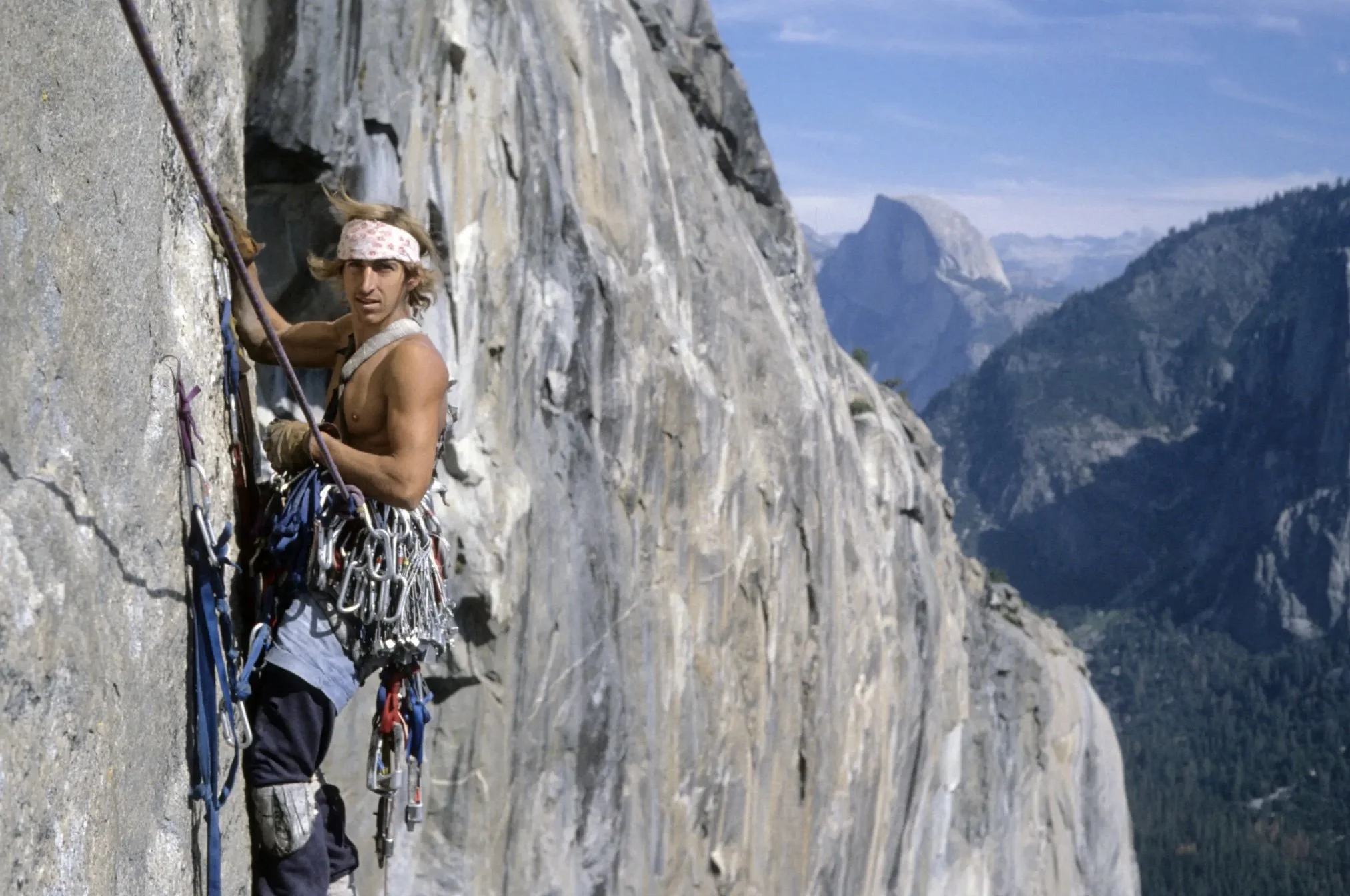
Dale Bard, Stone Master
Dale Bard first rappelled at the age of 14 through the Southern California Falconry Club. That sparked a life-long love of climbing.
He became one of Yosemite’s pioneering rock climbers, known for pushing the boundaries of free climbing and for big wall climbing in the 1970s and ‘80s. He was a key figure of Yosemite’s "Stone Master" era, established numerous first ascents and is remembered for his skill, minimalist lifestyle and mentorship of other climbers.
So committed to climbing was Bard, that he lived for an entire Yosemite season on fifteen borrowed dollars, demonstrating that a “simple climbing life was possible.” Many of Yosemite’s climbing pioneers lived seasonally as one of Camp 4’s ”dirtbag climbers” (individuals who lived out of their cars and tents in order to climb as much as possible, as described in Wikipedia).
While he did not promote himself, Dale was a kind and welcome ambassador to the outdoors. At Camp 4, he met with uncounted numbers of the millions of visitors to Yosemite, sharing his love of climbing and inspiring thousands to enjoy the outdoors. From across America, many children, for instance, invested their time at local climbing gyms, trying to be “just like Dale.”
Climbers talk often of “standing on the shoulders of giants.” In Yosemite and beyond, Dale Bard was one of those giants—not always the loudest voice, but one whose presence, style, and determination helped shape a generation. He is remembered as one of America’s greatest climbers, so highly respected among climbers that they called him “The Crack Master.”
Climbing achievements
A pioneer in free climbing. Dale was instrumental in shifting Yosemite's focus toward this style. He established many difficult free and aid routes, including the first ascent of Blind Faith, On the Rostrum, was part of the first ascents of significant big walls such as Sea of Dreams, Bushido and Sunkist, and established classic bouldering problems like High Plains Drifter. With Dave Diegelman and Jim Bridwell, he led the ascent of Sea of Dreams on El Capitan, considered to be the hardest-ever aided route (27 pitches, 39 drilled holes). His early efforts helped “free the Nose on El Cap,” before such an idea seemed possible.
Epic expedition
Dale embodied endurance and grit. In 1976, he and Nadim Melkonian completed the first 250-mile Sierra Crest traverse in mid-winter, enduring 44 days in which they faced storms, avalanches, and near starvation, but pushed through with sheer resolve.
Closing the gap
Bard was closely tied to the Stone Master era, bridging the gap between free climbing progress and big-wall boldness. He even appeared in the iconic film Moving Over Stone, capturing the spirit of that time.
"Dirtbag" ethos
Bard embodied the "dirtbag" climbing lifestyle, living simply and often in a tent. He was known for surviving off very little money. This commitment to living on his own terms made him an inspiration to many, especially those he met and inspired at Camp 4. To fellow climbers, the term “dirtbag” was not pejorative, but inspirational, describing someone who would sacrifice personal comfort and a career for his sport. It became akin to monastic mountaineering.
Mentorship
Dale was a significant mentor to many younger climbers, including legendary climber Randy Leavitt who credited Bard with providing a turning point in his own career. Climbers remember him for setting a high bar as a partner and for his calm, supportive nature.
Later life
Dale Bard continued to be involved in the climbing community throughout his life, even after he moved away from Yosemite.
He lost his battle to cancer at age 71, on October 1, 2025, in a Moab hospital, yet his name is invisibly etched along the climbing routes he pioneered on the big walls of California’s Yosemite National Park.
Block and Tackle, First Ascent https://www.youtube.com/watch?v=2YncbLeXjD8
Original Stone Master - The Crack Master https://www.youtube.com/watch?v=xquzLfQ4Cio&t=375s
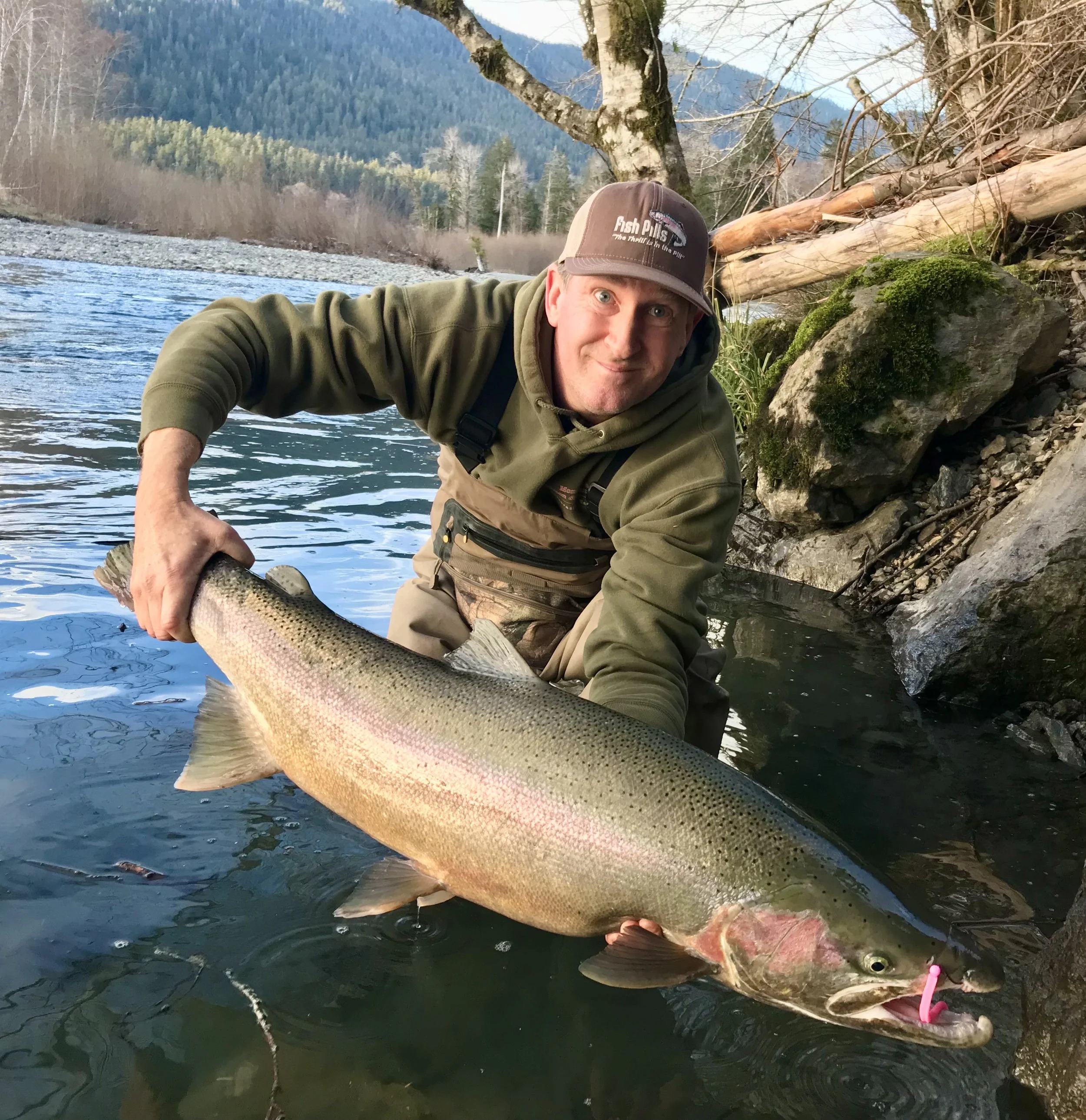
Mike Baxter
The complete outdoorsman, Mike Baxter was a sportfishing boat captain, salmon fisherman, boar hunter, radio show host, widely traveled adventurer and conservationist.
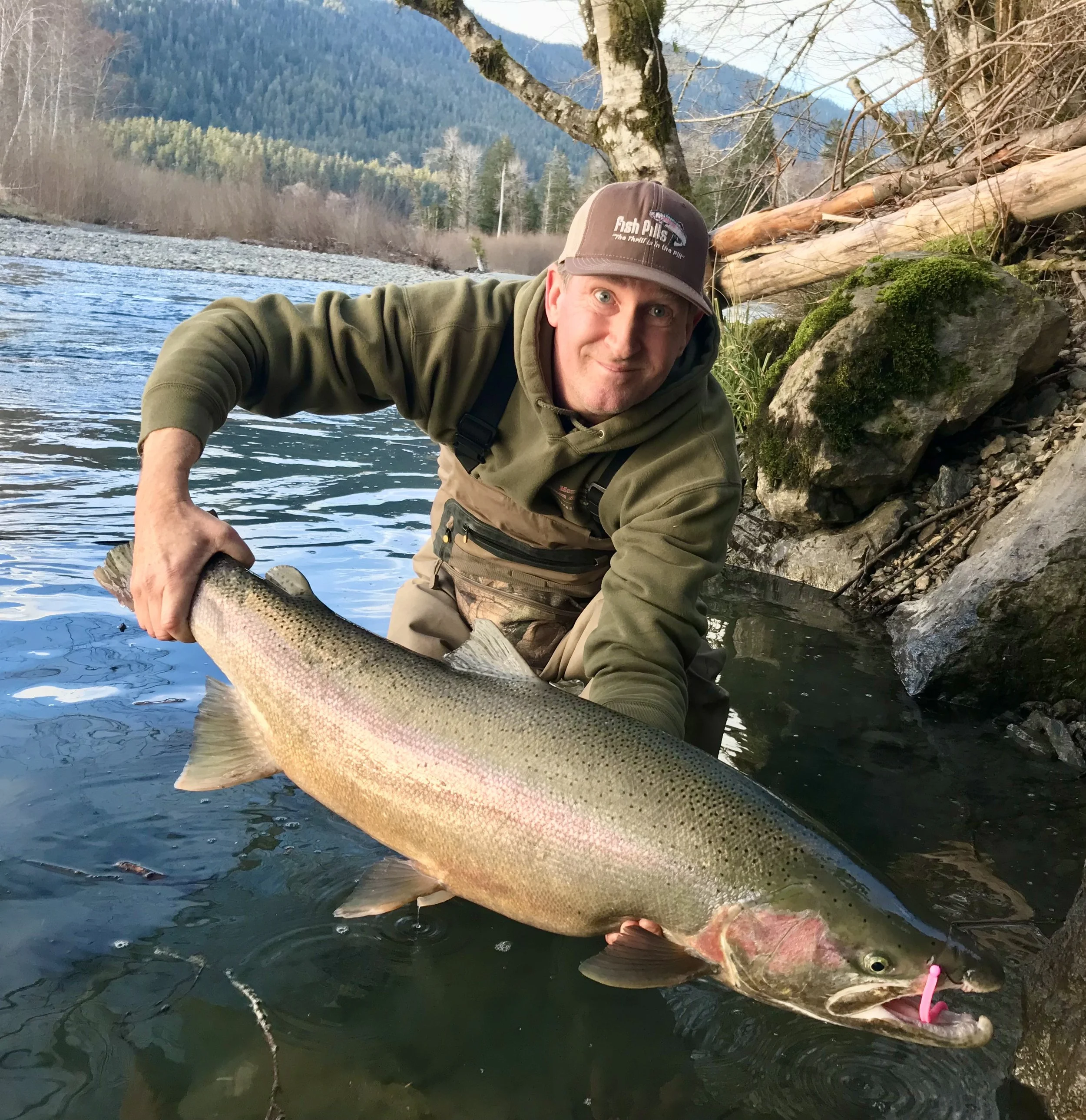
Mike Baxter
Sportfishing Captain, Salmon fisherman, Conservationist, Radio Host
Captain Mike Baxter is unique among California outdoorsman as his experiences run the gamut from ocean charter boat captain, commercial salmon fisherman, radio show host, creator and organizer of a major fishing event in the Central Coast, board member of the Monterey Bay Salmon and Steelhead Project, outdoor writer, passionate angler of varied fish species ranging from steelhead to bluefin tuna to swordfish, and dedicated hunter of wild boar. He is constantly living the legacy of a sportsman and teaching and recruiting others to be good stewards of our natural resources.
Baxter started commercial salmon fishing with his father, and at the age of 19, he wound up working the decks on San Diego long-range boats on the Royal Star and Royal Polaris on trips up to 23 days.
He attained his 100-Ton Masters Captain’s License and started running charter boats at the age of 21 out of Santa Cruz for ‘Shamrock Charters;’ eventually running the well-known Wild Wave, a 70-foot sport fisher with a capacity of 49 passengers.
His passion for steelhead has taken him along the Pacific Northwest where he spends as much time in the winter and spring on the Olympic Peninsula in search of giant steelhead. He has mapped and learned to row his drift boat down these rivers and has caught and released three steelhead well over 20 pounds.
He enjoys pig hunting, and he has captured several trophy boars including two over 300 pounds. An aficionado of bluefin tuna, he has landed several over 200 pounds along with an Opah over 100 pounds on rod and reel.
Baxter has been in pursuit of a swordfish for over five years, hooking and lost three, before recently ending his quest with fishing partner Jason Young with a 322-pound swordfish off Nine Mile Bank outside of San Diego. He dedicated thousands of hours to reach this quest.
Baxter started, produced, and hosted the ‘Let’s Go Fishing’ radio show through KSCO in the late 1990s and ran the seasonal show for 13 seasons. He obtained his own sponsors along with writing and producing their custom ads. He also wrote for the local Paper Press Banner, Western Outdoor News, and other publications.
In 2004, Baxter envisioned an affordable fishing tournament to provide Central Coast anglers an option during the slower winter season, and this spawned the Sand Crab Classic Perch tournament. Along with Allen Bushnell, he organizes over 30 volunteers and 300 participants, and dedicates all proceeds from the annual event to the nonprofit Monterey Bay Salmon and Trout Project (MBSTP).
Baxter has been a Board of Director with MBSTP since 2006, donating his time and attention to capture wild brood-stock steelhead for production of juveniles. He recruited crews to man a trap 24 hours a day until the goal was met, allowing 30,000 juveniles to be released in the San Lorenzo River. He also assists with various other projects including the annual spring release of 200,000 Chinook salmon off the Santa Cruz and Monterey wharves.
Baxter is both a passionate outdoorsman and contributor to the future of the sport.
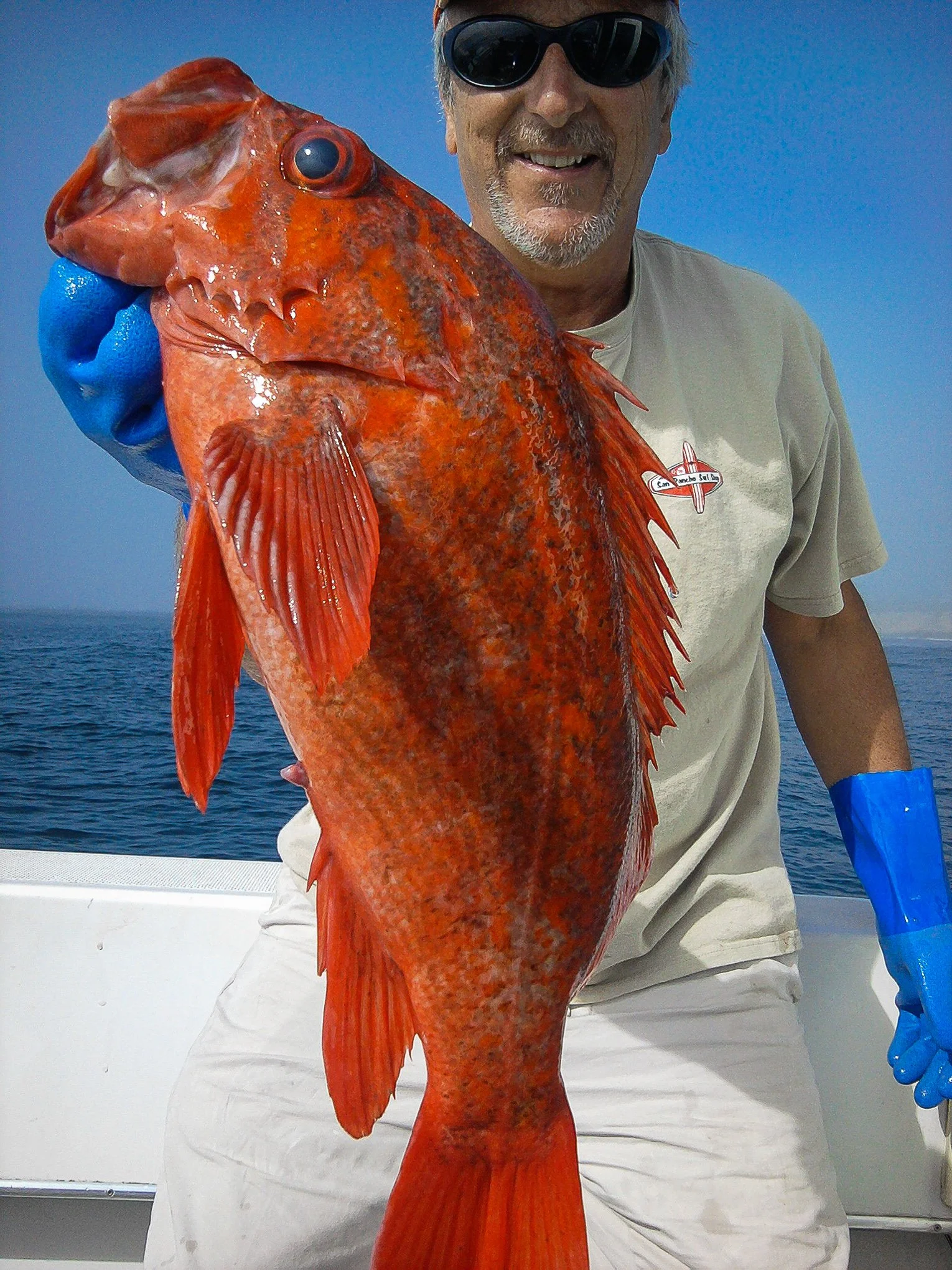
Doug Laughlin
Doug Laughlin combines a passion for the outdoors and for serving it and fellow outdoorsmen and women. An accomplished diver, he has been instrumental in saving California abalone and salmon. His videos of the outdoors have won acclaim and awards.
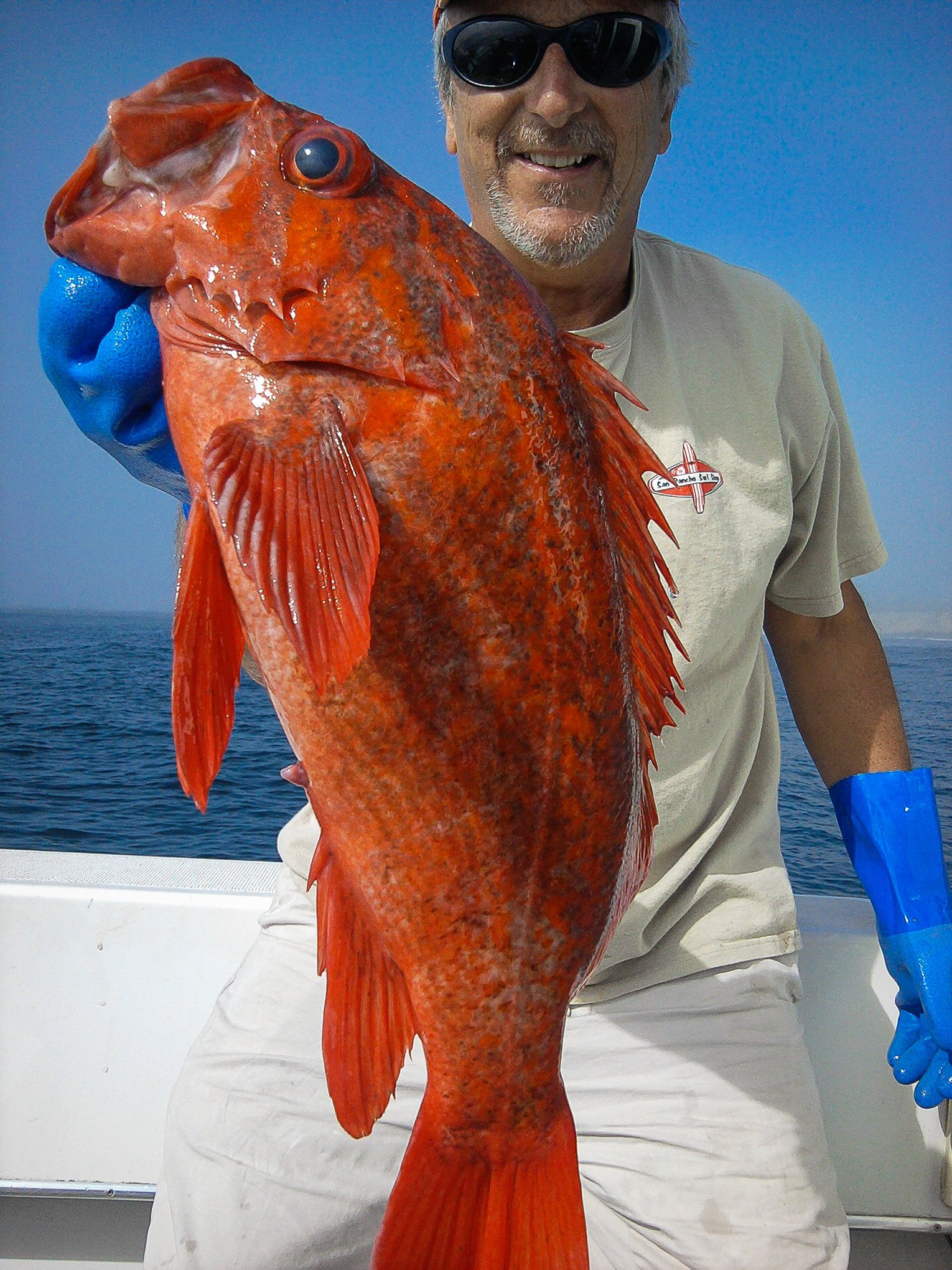
Doug Laughlin
Love of and Service to California’s outdoors.
Doug Laughlin’s life, from child to senior, has been shaped by his love of and service to the outdoors.
From an early age, Laughlin knew the outdoors would be his life. He became an avid outdoorsman as an Eagle Scout, providing ethics that drove his life in the outdoors as a diver, boater, fisherman and volunteer.
He became a world-class diver who devoted his skills to saving California aquatic species and helping others. As a scuba diver, Laughlin was perhaps most widely known as the guy who developed a skill to remove barnacles, mussels, slime and hard scale from ocean-going hulls. For over 20 years, he provided that service to hundreds of boat owners.
An accomplished boater and repairman, an angler with the skill to fish for all marine species including salmon, halibut and tuna, Laughlin was equally at ease on lakes and streams as on sea and shore, casting for anything that swims. Whether he is sport snorkeling for abalone or setting traps for Dungeness crab, Laughlin is a master sportsman.
Adept at underwater photography, Laughlin was hired by renowned cinematographer Al Giddings to capture a whale shark in action. Later hired by ABC and KGO television, he became a filmmaker on all levels of stories, including news, sports and special events. He won a series of Emmys and is revered as one of America’s best outdoor videographers. In his own words, “As a videographer, the camera is a very powerful tool that offers viewers a glimpse into our amazing environment.”
Laughlin dove for abalone for 50 years, always snorkeling in search of giants. Barring bad weather, he never missed an opener for Dungeness crab. His biggest tuna weighed 155 pounds, and he participated in 20 straight salmon openers, taking more than 500 people out for salmon while declaring, “Unless the ocean is nasty, we’re going.”
As a volunteer diver at Steinhart Aquarium of the California Academy of Sciences, Laughlin maintained three large aquarium tanks, often connecting with different fish species and many in the public viewing him. He was a volunteer with the California Department of Fish and Wildlife, supporting marine enforcement, marine research activities, waterfowl hunter checkpoint stations, kids fishing events, state lands improvement projects, creel surveys, abalone checkpoints, stream bed classification, hatchery fin clipping, outreach festivals, game warden “grizzly support” and many administrative duties. As an abalone diver, Laughlin served on CDFW’s recreational abalone advisory committee (RAAC), and represents California’s sport abalone diving interests.
He was well known as a Board member of the Coastside Fishing Club, based out of Pillar Point Harbor on the San Mateo County Coast and helped craft the group’s 15-year+ chinook salmon net pen acclimation program, where roughly 750,000 salmon each year - totaling more than eight million salmon - have been protected in a net pen, fed and acclimated to saltwater before being released. Millions of fish have thus been saved from water pumps, diversions and predators.
Laughlin helped establish and operate countless fishing derbies, veterans fishing and crabbing events, disabled kids fishing events, family fishing events, outreach at fairs and fishing festivals, and hatchery vaccinations. He was selected to participate in the Whale Safe Fisheries (Whale Entanglement Working Group), helping to set recreational salmon fishing seasons by the Pacific Fishery Management Council and negotiating seasons, gear restrictions, depth limits and other regulatory changes by CDFW for our ocean fisheries. And, he continues to mentor Scouts in their quests to climb the ladder of scouting and become Eagle Scouts.
Every organization needs an ethics-guided hero behind the scenes who can master details, results, schedules and team work. For many in California’s outdoors, that person was Doug Laughlin.
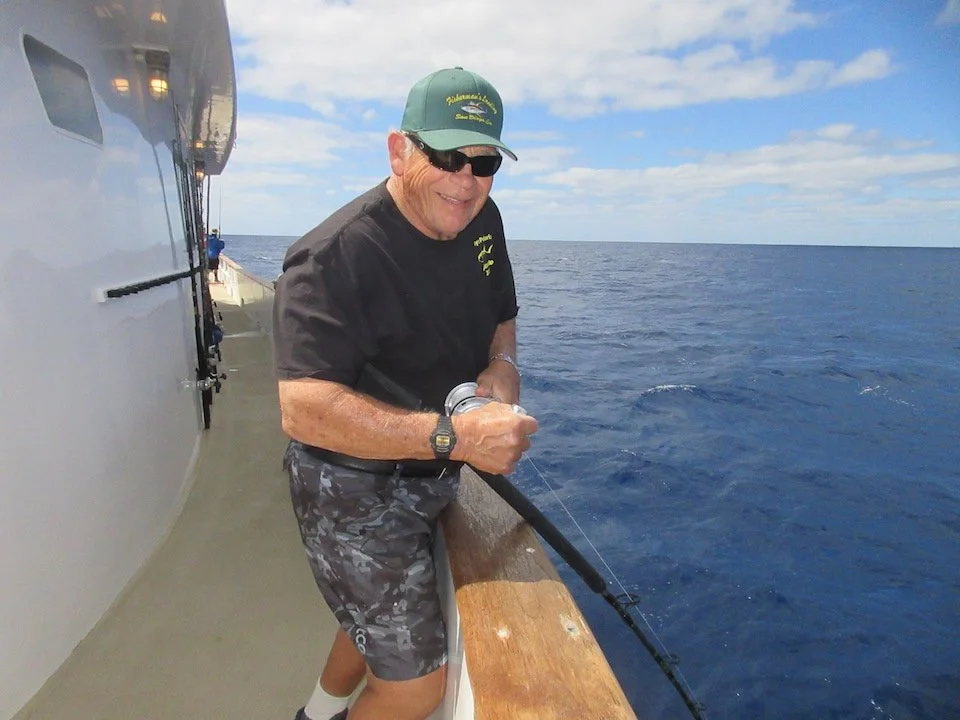
Frank LoPreste
A life at sea well-spent has been Frank LoPreste’s legacy. During his more than 70 years on sportfishing boats, he led San Diego’s legendary sportfishing fleets far beyond the horizon and great heights.
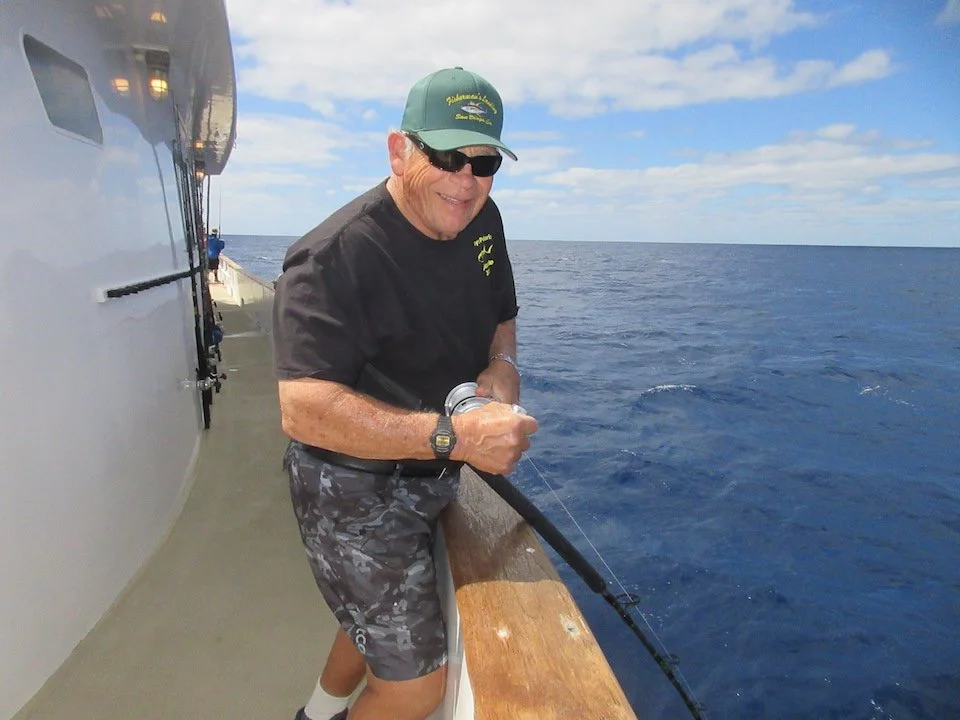
Frank LoPreste, A life spent greatly at sea.
If California ever chose its most legendary sea captain, Frank LoPreste would surely be on the list.
His life at sea began in 1951 as an eight-year-old deckhand on the Clemente, San Mateo, Frontier, then Sea Raider, starting at $3 a day. By 21, he was a licensed captain, running his own vessel.
Today, LoPreste is widely regarded as a pioneering figure within San Diego’s long-range sportfishing fleet. He was among the first sportfishing captains there to voyage to remote areas in search of trophy game fish. He popularized Clipperton Atoll in the eastern Pacific, 1,600 miles southwest of San Diego, and further expanded the San Diego fleet’s range beyond Mexican coastal waters to the Baja & Revillagigedo Islands. For his exploits and long-range sportfishing adventures, Frank LoPreste is described by the International Game Fish Association as a “Living Legend.”
On Royal Polaris, LoPreste innovated kite fishing, a technique where a kite is used to carry baits far from a boat, keeping them in the water at the surface. LoPreste recognized its effectiveness in targeting species like sailfish, tuna, and kingfish and presenting live bait and lures in a way that imitates a skipping baitfish or avoids the boat's wake. Once the bait is bitten, the line releases from a clip on the kite, allowing the angler to reel the fish in more reliably and safely than other methods. With his novel approach, sportfishermen were more successful in landing big fish and better enjoying their trips.
Now 80 years of age, LoPreste has been cutting back, though he is remembered as having been tireless in serving his guests, working late hours, mentoring crew, treating guests and crew alike with respect and compassion, and always willing to help bait a hook and teach others what he knows about fishing. His concern for the guest experience is noted on social media by many past customers. “RubberHook2” commented on SatFish that at 14 years old, he was called to the bridge by LoPreste to take the helm and experience steering Royal Polaris in large S curves across the swelling Pacific, a childhood memory he has cherished into adulthood.
His expertise as a blue-water navigator, sea captain and sportsfisherman is unexcelled. LoPreste introduced advanced fuel, refrigeration, and bait-storage systems, making multi-week voyages possible. More than any other captain, Frank LoPreste molded today’s great San Diego sportfishing fleet and pioneered long-range sportfishing expeditions to far-flung and remote islands across the Pacific Ocean. Many of San Diego’s sportfishing captains were mentored by LoPreste and owe their lives, skills and success to his guiding hand.
When fellow Captain 39-year-old James “Rollo” Heyn - who began as a deckhand for LoPreste - lost his life at sea in 1999, LoPreste - joined by friends and anglers - established the non-profit organization Friends of Rollo (also known as Captain Rollo's Kids at Sea). Its purpose is to keep Captain Heyn's legacy alive by providing ocean fishing and marine life awareness trips for disadvantaged, underserved, physically challenged, and at-risk youth who otherwise might not have that opportunity.
Through Captain Rollo’s Kids at Sea, LoPreste and his friends sought to share their love of fishing and the marine environment, which was a passion of Captain Heyn's, with as many children as possible. The organization covers all costs, including the boat charter, fishing tackle, and lunch, to ensure the experience is accessible to all participants. Since its inception, the program has introduced over 150,000 children to ocean fishing and conservation.
Over his lifetime, Frank LoPreste has captained and owned several vessels including Sport (‘65-66), Sea Horse (‘67), Fury (‘67), Patrician (‘68-70), Webfoot (‘71), Prowler (‘71), Searcher 1 (‘71-74), Nova (‘75-76), Cape Polaris (‘74-77) and Royal Polaris (‘78 to today).
However, it was on the 109’ Royal Polaris that his fame as a long-range skipper was founded. He made her the fastest long-range sportfisher in the world, equipping Royal Polaris with the latest navigational and fish-finding gear. Her range is virtually unlimited due to her enormous fuel, bait, and refrigerated fish storage capacities. And, she has coursed the wide Pacific in search of innumerable exotic sportfishing adventures, ones that remain available to anyone. What he accomplished while innovating American sportfishing has led to Frank LoPreste’s Royal Polaris to be acclaimed near and far as the world’s finest sportfishing vessel.
Royal Polaris is a great boat, but it is Frank LoPreste who made her and himself legendary. From boyhood deckhand to blue-water skipper, Frank LoPreste has led a life of adventure and innovation on the high seas in service to those involved in the sport of ocean game fishing.
Frank LoPreste on Casting - https://www.youtube.com/watch?v=FJHhs3xUms8
Frank LoPreste on Bite Zone - https://www.youtube.com/watch?v=W9L_XJKo0V4
Friedman on Frank LoPreste - https://www.youtube.com/watch?v=Kohv325Q1AA
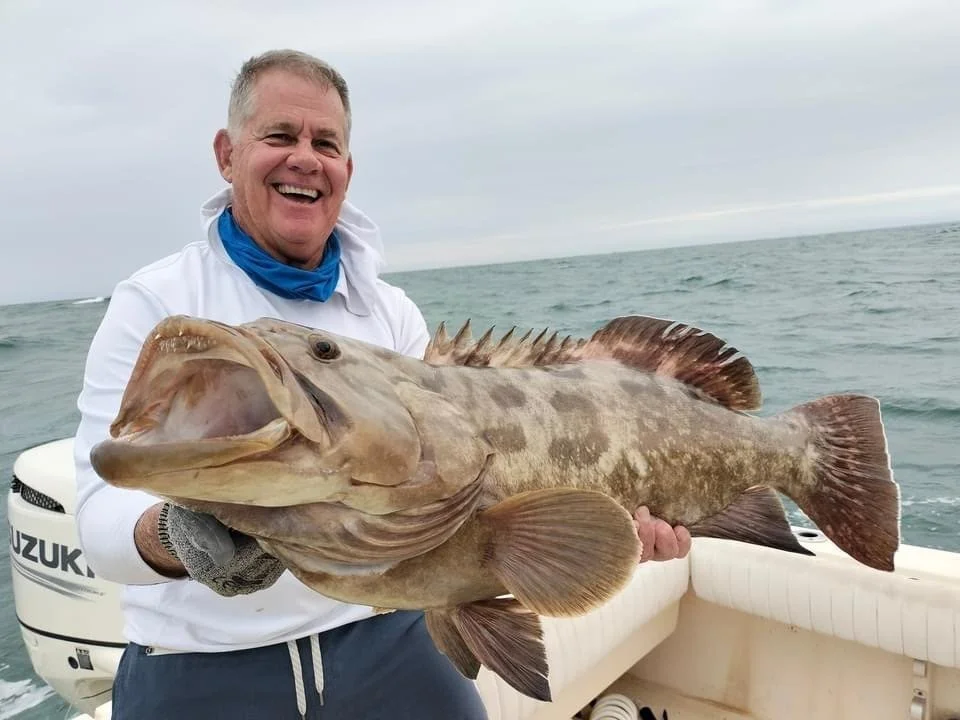
Pat McDonell
A champion of tournaments, sportfishing, broadcasting and outdoor reporting, Pat McDonell has introduced thousands to the joy of the outdoors.
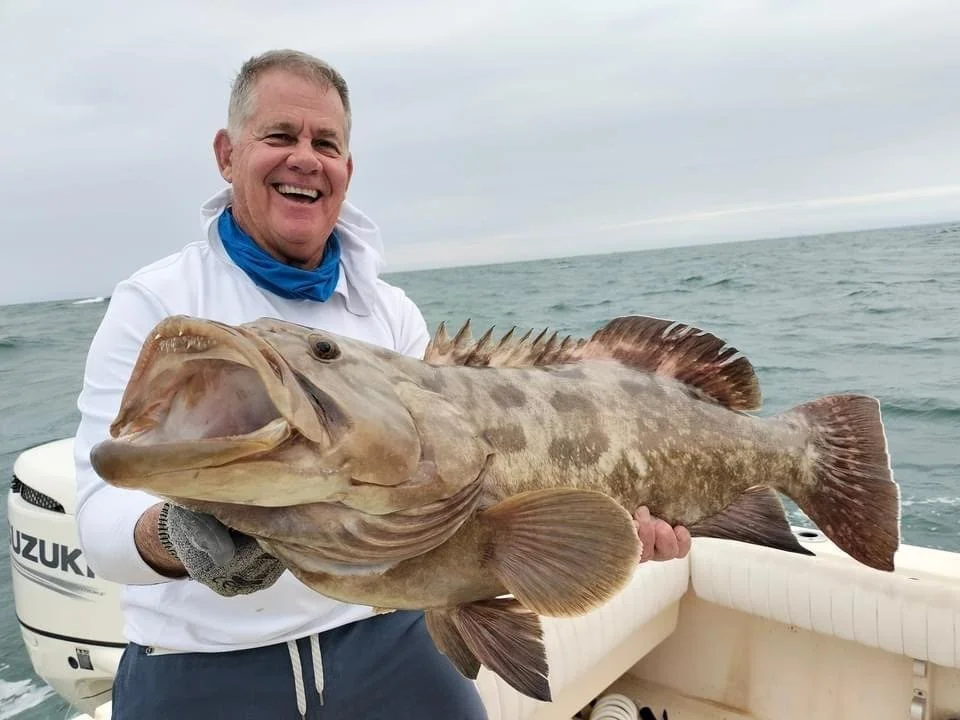
Pat McDonell
Champion of tournaments, sportfishing, outdoor reporting and philanthropy
If there were a Mount Rushmore of California outdoorsmen, Pat McDonell would be at the center, wrote one of the nominators of this inductee.
Sportfishing was and remains his passion. When commercial fishermen were depleting near-shore populations of game fish off California through their use of gill nets, McDonell helped lead the long fight to secure over 200,000 signatures and raise $1 million in 1990 to fund Proposition 132, the Marine Protection Zone and Gill and Trammel Net Prohibition Initiative. McDonell was one of the founding board members of United Anglers of Southern California which championed Prop. 132. In due part because of their efforts, the initiative was approved by a margin of 55.76%. Since then, white sea bass, halibut and other species have rebounded along the California coast.
McDonell began directing fishing tournaments and leading fishing trips to Alaska and Cedros Island near Ensenada while working at Western Outdoor News. Among the more than 60 tournaments which he directed is the world’s largest tuna tournament, the Cabo Tuna Jackpot (CTJ).
Impressed after competing in one of the Bisbee tournaments, McDonell and Kit McNear founded CTJ, described by McDonell as, “one that was fun, cost less money to enter, and in a tuna format.” Since then, their creation awarded over $19 million in payouts and hosted as many as 158 teams. Over its lifetime, CTJ has welcomed tens of thousands of anglers and partiers. Its motto, after all, is “Fish Hard, Party Harder.”
From its beginning, CTJ was designed to benefit local children. The latest beneficiary has been Smiles International (SI) which helps children with facial cleft deformities. As a result, thousands of kids have “become more normalized and functional with abilities to enter their societies with the ability to speak, eat, hear and breathe properly, as well as having beautifully functioning SMILES as they complete their lives.” wrote SI’s Dr. Jeffrey Moses. Nearly a half million dollars has been raised for charitable causes by McDonell-led tournaments throughout his lifetime.
Pat McDonell has fished in ten countries, including Australia, Panama and Canada’s British Columbia. For the past 23 years, he has led fishing trips to Sitka Alaska, Cedros Island and Costa Rica, taking thousands on “life’s list” expeditions. McDonell was among the first outdoor writers to write extensively about Baja California and its sportfishing, traveling throughout Baja (including its most remote spots) more than 80 times.
For three decades, he wrote for and was Editorial Director of Western Outdoor News (WON). His articles and columns were so popular among sportsmen that one of California’s most celebrated outdoor editors said, “Readers would tell me Pat’s columns were the first thing they’d read upon opening Western Outdoor News.”
A lifelong journalist and sportsman, McDonell began writing for the student newspaper at San Diego State University. After joining WON a few years later, he covered fishing and hunting issues, personalities, destinations, tactics and anything else worthy of a headline.
He is most proud of “Erik Sinking; Two Survivors Tell Their Story,” an investigative article that he wrote about the tragic loss of eight souls who were on the Mexican sportfishing boat Erik which sank overnight out of San Felipe. That poignantly written and carefully researched column took First Place in the 2012 Outdoor Writers of California Craft Awards and influenced the Mexican government to tighten lax enforcement of safety standards and the accessibility of lifevests on charter boats, saving untold lives.
McDonell was also one of the first regular guests to broadcast sportfishing news on various radio and TV broadcasts to promote fishing, tournaments, conservation efforts and the Fred Hall outdoor shows. He began these appearances in 1988 and continued his radio reports for over almost four decades, often appearing on “Let's Talk Hookup.”
Saltwater sportfishing hasn’t been his only outdoor passion. He was a rated beach volleyballer; summit-ed two Sierra Nevada 14ers - including Mt. Whitney; hunted Mule deer, wild boars, turkey, dove, pheasant and waterfowl in California and Mexico; skied and snowboarded the Sierra; surfed the Pacific; cycled European roads; competed in half marathons, marathons and triathlons; SCUBA dived; and perennially held court at festivities the night before the Eastern Sierra trout opener, after which he’d break away to wet a fly. He was twice an IGFA all tackle world record holder; caught two world record fish, and landed seven tuna weighing over 200 lbs, including a yellow fin that still has his arms aching (and that’s a fish story).
Pat McDonell’s life has been filled with outdoor adventure and accomplishment. He stands as one of California’s most knowledgeable and storied outdoorsmen. And yet, he is the first to say, “No matter how much you know, the fish know more.”
Cabo Tuna Jackpot - https://www.youtube.com/watch?v=fpcy4niisIo
Friedman Adventures Podcast - https://www.youtube.com/watch?v=YxDNXXE0Fvg
Let’s Talk Hookup - https://letstalkhookup.com/podcast/lets-talk-hookup-7-8am-pat-mcdonell-from-western-outdoor-news-2/

MIKE AUGHNEY
Mike Aughney is the originator of online fishing reports. An outspoken proponent of fisheries and the environment, he has been a leading voice for California salmon.

Mike Aughney and sons
Salmon conservationist. Angler. Sportsman. Waterfowl hunter. Originator of online fishing reports.
Mike Aughney, a lifelong advocate for the survival of California’s fish and wildlife, spent most of his 63 years as recreational and commercial angler and environmental advocate. He is singularly recognized as the originator of online fishing reports, beginning with the establishment of USAfishing.com in 1994. He continued his advocacy as a charter board member of the Golden State Salmon Association (GSSA) and is integrally involved in all aspects of this important organization.
Beginning in his 20s, Aughney worked both in the recreational salmon charter boat fleet off the Golden Gate before joining the commercial salmon fleet in both California and Alaska.
In his 30s, with salmon stocks in decline, he began a career with the Marin Municipal Water District, while sustaining his interest in ocean fisheries. In 1994, he started the first internet fishing report website using his many contacts in the charter boat fleet as his information source.
What started out as ‘Fishsite’ became USAFishing.com, covering most of the saltwater and freshwater fisheries in Northern California, attracting a large recreational readership. Aughney developed a reputation as being brutally honest, sharing his opinions on important issues, especially negative impacts on salmon by humans, water diversions, or government agencies. Due to the explosion of other internet mediums, Aughney closed the site after 22 years.
As an outspoken proponent of fisheries and the environment, he was asked to be a charter board member of the Golden State Salmon Association in 2011, currently holding the role of vice chair.
GSSA is the leading California non-profit organization dedicated to the conservation and restoration of California's salmon industry and environment. Aughney enjoys teaching others and sharing knowledge and insights about salmon issues for GSSA on his weekly segment on the California Sportsman Radio show. He has become the leading voice for California’s salmon.
Aughney, a native of Novato, began his fishing adventures for sturgeon in San Pablo Bay before branching off to commercial and recreational salmon. Aughney spent many hours at the mouth of the Klamath for salmon and steelhead, and he currently fishes several weeks per year on the Kenai Peninsula rivers of the Kenai, Russian, Kasilof, Anchor, and Ninilchuk from his vacation home in Clam Gulch. He also targets Pacific halibut from a drift boat, launching from the beach.
Aughney was part-owner of the ‘Reel Magic’ six pack out of Bodega Bay, renovating the boat and building a successful business before selling his interest to the current owners. He is an avid waterfowl hunter who has consistently worked out of a blind in the Colusa region every season.

DUSTY BAKER
Major League Baseball legend Dusty Baker is also a legendary angler and duck hunter. This extraordinary champion has inspired thousands to head to the outdoors and accomplished a scope of adventures that has made him one of the nation’s most traveled outdoorsmen.


Major League Baseball legend Dusty Baker is also known to California outdoorsmen and women as an angler and duck hunter of renown. This inspirational speaker, fundraiser, leader of youth and former baseball champion has inspired thousands across his home state and the nation to head to the outdoors, with a personality that mixes honesty, vibrance, buoyancy and tough-love.
Baker has fished for dozens of species across the U.S. and western hemisphere: fly-fishing for brown trout in Montana and, with conventional gear, for peacock bass in Kauai. He has sought sturgeon on the Columbia River, tarpon off the coast of Mexico, giant bluegill in Missouri, bass in Florida, and many species in San Francisco Bay, the Sacramento River, Delta, Central Valley and on lakes in the Bay Area foothills and throughout California.
He said, “Not only do I love it, but I need to be out there. I just gotta be outdoors, There's something about it."
His scope of adventures has made him one of America’s most traveled anglers, fly fishing for trout on Hat Creek near Burney, and bass at Lake Berryessa, Clear Lake and many lakes in Florida, Alabama, Georgia and beyond. Baker came close to catching the California Game Fish Grand Slam, a sturgeon, halibut, striped bass and salmon, in a single day when late in the afternoon he lost a 50+-pound salmon after a 2 1/2-hour fight off the Marin coast.
After missing this great accomplishment, he said, “You know, ‘The Old Man and the Sea' was one of my favorite books, because I didn't know whether I was pulling for the old man or the fish. That day that fish (50+-pound salmon) got me, took me in the rocks, and he won. You want to win all the time, but you have to tip your hat to the opposition. I didn't lose. He beat me. There's a difference."
For his love of the outdoors, Dusty credits his dad: “I really love my dad for turning me on to fishing when I was a kid. We fished almost every weekend. The thing that I remember the most was getting up at 3 or 4 o'clock in the morning. My dad would already be up, ahead of the alarm, and I would say, 'Hey, Dad, let's go.'”
Baker said, “Those are some of the best times I've ever had." and they led him to pass along his passion for the outdoors, by taking youth on adventures to waterfowl marshes, allowing children to experience the magic of the marsh coming to life at dawn, while he regales the kids with talk of the various birds, their behaviors and calls.
Baker has contributed his dynamic and inspirational speaking skills to fundraise for several organizations and is a champion of the California Waterfowl Association. His success led to All American Speakers, where he is contracted to provide inspirational speeches to groups across North America.
"When I was 23 on the Braves, Luke Appling (baseball Hall of Fame shortstop) took me aside and told me, "To be lucky, you've got to think lucky." That goes for anything. If you don't think lucky in fishing, you don't catch any fish. Am I lucky? It's true, I'm lucky. If you think you're lucky, that's what you get."
Among their many baseball accomplishments, Dusty Baker and Ted Williams share being inducted to an outdoors hall of fame for their love of and prowess as anglers.

BELNO “BEL” LANGE
One of California’s first outdoor broadcasters, Bel Lange started his Emmy-winning TV show, ‘The Outdoorsman’ the mid 1950s. He introduced his viewers, listeners and readers to the greatness of California’s outdoors for decades thereafter.
Bel Lange
Pioneer outdoor broadcaster. Angler. Hunter. Passionate outdoorsman.
Every fisherman and hunter raised in the Sacramento/Stockton region from the mid-’50s through mid-’80s grew up to the voice and image of Bel Lange and his ‘The Outdoorsman’ TV show.
Upon Bel Lange’s passing, the Mountain Democrat (California’s oldest daily newspaper and then home to Lange’s tales of the outdoors) reported that, “His written words put us in the boat, at the shoreline or in the water to reel in that prized catch while his descriptive hunting excursions put us behind the sight and pulling the trigger from deep in the brush.
“We traveled far and near with Bel Lange — to Alaska to seek salmon and halibut; to right here in our backyard in search of trout, mackinaw and bass.
“Lange … delivered keen insight to his readers on how to fish, hunt and enjoy the outdoors. … Lange is probably best known for his weekly TV show, ‘The Outdoorsman’ that won an Emmy in 1955 for best sports show in Northern California.”
Lange started the television program on Stockton’s ABC affiliate in 1954, eventually moving it to CBS’s KOVR, Channel 13 in Sacramento, where he served as Executive Producer, Production Manager and General Manager.
‘The Outdoorsman’ lasted 28 years on TV. Thereafter, Lange hosted the hour-long call-in radio show, ‘The Outdoorsman with Bel Lange’ on Sacramento’s KMJI station. Through it all, each show ended with Bel’s memorable closing line, "Take Time to Enjoy the Great Outdoors." Those oft-repeated words encouraged many to do just that.
A beloved feature of his show was Bel’s Bafflers, trivia about the Great Outdoors that entranced people who’d never cast a line, bagged a pheasant or hiked a mile along a forest trail. He compiled them into the book (still being sold on Amazon), “Bel’s Bafflers, Outdoors trivia, recipes and cartoons” that featured on its cover, the baffler, “Can you name the bear that is pigeon toed?” If you named any bear, you were probably right, as most bears are pigeon toed. Lange had a knack for engaging people in becoming interested in outdoor topics, through the use of minutiae, humor, oddities, curiosity and little-known facts. Though, he backed up his entertaining delivery with solid information about camping, hunting and fishing.
Lange passed away on April 1, 2013, at 88. He is remembered as “an avid fisherman, hunter, camper and guide to many. Lange’s paramount scope of outdoor adventures retold colorfully on air and in print were an introduction to outdoor sports for generations of Californians. He provided motivating memories, entertainingly described, for nearly six decades. During that long tenure, he was credited with inspiring tens of thousands to mimic his adventures and “Take Time to Enjoy the Great Outdoors.”

YANCEY FOREST-KNOWLES
Described as the embodiment of the authentic outdoorsman, Yancey Forest-Knowles has experienced the outdoors like few others. He has fished fresh and saltwater species worldwide, guided white water trips, sailed the Pacific and Atlantic oceans, been a competitive sporting clays shooter and been a key voice in the halls of government for the outdoorsman.


Described as the “embodiment of the authentic outdoorsman,” Yancey Forest-Knowles has experienced what few other California outdoorsmen or women have.
An avid hunter, fisherman and conservationist with 70 years of experience, Forest-Knowles is also a staunch supporter and advocate for our hunting and angling heritage.
He is highly respected and served on several of California’s leading committees to restore water and wetlands; and he worked to inspire protection of waterfowl, fish and other wildlife.
This great outdoorsman is one of California’s most traveled hunters and anglers. His passions are waterfowl hunting and fly fishing, leading to multiple national and international trips.
As a young man, Forest-Knowles leased hunting rights on ranches and marshes. Later, he became the managing partner in a north Sacramento Valley duck club.
Fishing for both fresh and saltwater species throughout the world has played an equal role in Forest Knowles’ life. A white-water raft guide, Forest-Knowles led trips for over a decade, and helped to develop several of the state’s rivers for commercial and public rafting. He also sailed in races across both the Pacific and the Atlantic oceans. Forest-Knowles is also a winning competitive sporting clays shooter.
His travels led to a deep appreciation for wildlife. Forest-Knowles became a leader, advocate and supporter of organizations and projects to benefit waterfowl and fisheries. He met with two Interior Secretaries in Washington, D.C., and helped gain the first dedicated water rights for Lower Klamath National Wildlife Refuge.
As California Waterfowl Association Chairman, he successfully led the effort to conserve and protect our outdoor heritage. Forest-Knowles continues to serve on the Regulations and Traditions Committee and serves as Secretary of the Klamath Water Committee. He also is a member of the California Waterfowl Hall of Fame Nominating Committee.
Among his many leadership roles, he served on the Board for the California Outdoor Heritage Alliance, was the California representative for the Congressional Sportsmen’s Foundation, was a Founding Member of the Golden Gate Salmon Association, and helped organize a successful sporting clays competition and fundraising event supporting the Wildlife Officers Foundation. He is also a key member of the Pacific Flyway Center Advisory Committee.
Forest-Knowles was inducted into the International Order of St. Hubertus, the oldest (1695) hunting fraternity in the world. As past President of the Russian River Fly Fishers, he led the effort to build a professional casting pond.
Forest-Knowles has authored or appeared in several national outdoor magazine articles and co-authored a highly acclaimed book, “Pacific Flyway – Historical Waterfowling Images.”
His commitment to leaving a healthy environment with abundant wildlife inspires hunters, anglers, conservationists, the public and politicians to take part in the wonders of the natural world and protect all nature for future generations.

BRIAN RILEY
Brian Riley is the California originator of what has become a national trend in outdoor youth education. Three generations of young outdoorsmen and women have been inspired at his Red Bank Outdoor Academy.


Brian Riley is the California originator of what has become a national trend in outdoor youth education.
His lifetime of work in the outdoors began in the 1980s, when at 22 he was hired as a bird boy at Red Bank Outfitters, one of California’s oldest hunting and fishing institutions. He worked his way up, eventually buying the operation from his boss.
Soon after, Riley began offering occasional youth-specific experiences, and realized his deeper purpose in the outdoors… to turn youth into safe, ethical and passionate hunters and anglers.
For over 25 years he has done this, conducting yearly youth-focused outdoors camps and hunts and employing California youth who go on to become outdoor professionals themselves. In just this, he has contributed immeasurably to protecting California’s traditions of conservation and outdoor appreciation.
Many of his young wards are so inspired by his approach that they pass along their new-found love of the outdoors and outdoor sport to other youth. Whether it is through Riley’s camps, seminars and hunts or just by example, Brian has made his life’s work that of introducing youth to the outdoor sports of hunting and fishing.
In youth camps alone, he and his team have educated over 5,000 kids about their opportunities and responsibilities in enjoying the wildlands wildlife around them.
Riley didn’t even realize that his life’s work had transformed from running a hunting lodge to youth outdoor development until 2021, nearly 25 years after he began youth programs when he established the Red Bank Outdoor Academy.
Riley’s Academy is not just for kids; the RBOA team offers opportunities for anyone who wants to learn more about safely exploring wilderness activities, especially hunting and fishing. Red Bank also actively raises funds, providing scholarships for campers who might not be able to attend otherwise.
Three generations of young outdoorsmen and women have now been inspired by their sojourns at Red Bank. Brian’s devotion is not just to make youth skilled in the outdoors, but to inspire safety and ethics among them.
Brian entered into this business because of his love of hunting, hunting dogs, and guiding, and despite the 24/7/365 demands of running a hunting business (and living on the same property) he has managed some adventures of his own. Brian has hunted birds and big game extensively in his beloved California, but also in Idaho, New Mexico, Colorado, Wyoming, Mexico and South Africa. In nearly every trip, he has taken staff members with him, with an eye to learning about other operations and bringing new ideas back to Red Bank Outfitters and Red Bank Outdoor Academy. Notably, Brian accompanied a group of his youth campers on their first South African safari–but opted out of hunting his own game, in favor of coaching them on theirs.
When pressed about his own hunts, he still marvels at his dream New Mexico hunt-–made possible by a longtime client, who wanted to see Brian experience what he had provided to so many others. This client insisted that Brian “be the client,” and introduced him to the most majestic wild elk in the country. Brian obliged, and harvested a grand old bull that the guides still talk about.
The hunting lodge may be where Brian’s bread is buttered, but it is through his development of young and new anglers and hunters that he is unique among guides, outfitters and lodge operators.
When Brian Riley and his team began inspiring youth to be outdoorsmen and women, youth outdoor camps weren’t yet “a thing.” Today, many lodges and outfitters have followed his trail.
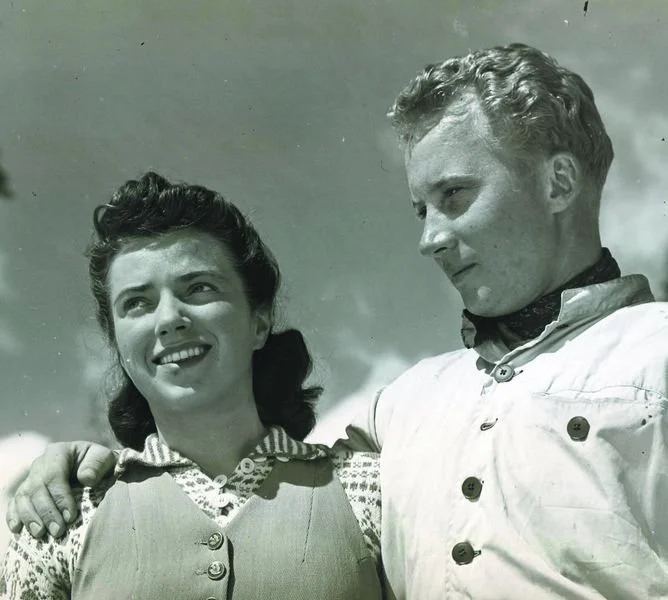
WAYNE POULSEN
Ski champion Wayne Poulsen purchased Squaw Valley with the dream of building a great ski area there. Fortunes prevented that, but not his impact on California skiing.

A University of Nevada star skier in the 1930s (on a U.S. team that defeated Hitler's best collegians and placed third in the U.S. Olympic trials), Wayne Poulsen purchased 2,000 acres from the Southern Pacific Railroad in a beautiful valley northwest of Lake Tahoe with plans to develop a ski area.
Poulsen and his wife, Sandy, would climb its peaks in winter using climbing skins.
Famously, one peak was so steep that Sandy had to make 22 kick turns to ski down it. Wayne named the mountain KT-22 in homage to K-2 a famous peak in the Himalayas.
Following service in World War II, Poulsen became an airline pilot, though always with the dream of building a ski area in Squaw Valley. In 1946, he met Harvard-trained lawyer, Alexander Cushing, who was vacationing at nearby Sugar Bowl. Poulsen showed Cushing his valley and the NY lawyer immediately became infatuated with Poulsen’s idea of creating a mountain resort there. The two began working together. Poulsen had the land and Cushing had the capital, political connections, and the ability to make the project happen. However, the two men soon had a falling out over the resort's future. Poulsen lost control when Cushing became chair of the Squaw Valley Ski Corporation.
While Cushing controlled the mountain, Poulsen remained living in the Valley, opening a ski area for beginners (Papoose) and consulting on Sugar Bowl, Bogus Basin, Mt. Rose, Incline and Boreal Ridge. When the State of California sold its interest in Squaw Valley to Mainline Properties, an Australian firm with interests in real estate development, Mainline welcomed Poulsen's involvement, but that too fell apart.
The Poulsen story is star crossed. A ski champion had a dream that became reality, but without him to lead or benefit from his idea. And yet, the Poulsen family left a legacy on California ski sport both from Wayne's vision and from the Poulsen family's successes on the US Ski Team.
Poulsen's dream brought the Winter Olympic Games and fame to California, greatly expanding winter sport in The Golden State.
Wayne Poulsen was inducted to the U.S. National Ski Hall of Fame in 1980.
EDIT PAGE

ALEXANDER CUSHING
Alexander Cushing took Wayne Poulsen’s dream of establishing a ski area at Squaw Valley and turned it into reality, bringing the VIIIth Olympic Winter Games to California and turning sunny California into a winter sports destination.
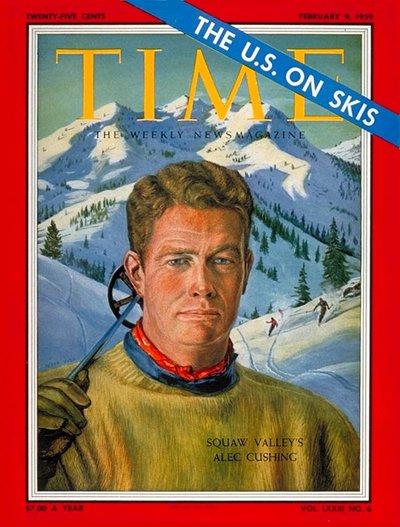
Wayne Poulsen had a dream, but he just did not have the money. Alexander Cushing took Wayne Poulsen's dream and turned it into reality, eventually developing what is called today, Palisades Tahoe.
Upon seeing Squaw Valley during a 1946 ski vacation, Cushing realized its potential to become a great mountain resort and went into partnership with Poulsen to develop it, investing $145,000 of his own money and bringing $275,000 from Laurence Rockefeller and other investors to found the Squaw Valley Ski Corporation in 1949. Soon afterward, his relationship with Poulsen soured. He then led the company without Poulsen's involvement.
The resort began with one chair lift (proclaimed the longest double chair lift on Earth), two rope tows and a 50-room lodge. It remained as such until, after reading a newspaper account on the race to host the VIIIth Olympic Winter Games, Cushing submitted a proposal in 1954, to hold a new type of winter games with an athlete's village and temporary facilities - to keep costs low.
It was a publicity stunt on Cushing's part. He never imagined he'd actually win the games, but the novel idea struck a chord with the International Olympic Committee, and they awarded the games to California over Innsbruck, Austria and St. Moritz, Switzerland. It was the first Olympics to be televised live, bringing national attention to U.S. skiing and making Cushing the first and only ski area operator to appear on the cover of TIME.
The 1960 Olympic Winter Games transformed California skiing instantly. President Dwight D. Eisenhower was building interstate superhighways, and it became imperative that I-80 be completed in time for the '60 games.
California's Winter Olympics introduced the idea that skiing in the High Sierra was an easy drive away for generations of Californians who head to the Sierra Nevada on winter weekends. Skiing became part of the California lifestyle because of what Cushing did.
Following the Olympics, Cushing set about building Squaw bigger and better than any other ski area had ever attempted, always striving to have the most and largest lifts: the longest chair, the first gondola, the largest tram, the only funitel.
Today, Palisades Tahoe (which combined Squaw Valley and Alpine Meadows) has 42 lifts, covers 6,000 skiable acres and attracts some 600,000 skiers. It is the largest mountain resort, by any measure, in California. Cushing was inducted to the U.S. National Ski Hall of Fame in 1999.

J D RICHEY
J D Richey is one of California’s preeminent outdoor guides, authors, photojournalists, writers, an innovative angler, and an ardent conservationist.

J D Richey is one of California’s preeminent outdoor guides, authors, photojournalists, writers, an innovative angler, and an ardent conservationist.
Known to readers of the Western Outdoor News, Field & Stream, Western Angler, Western Outdoors, California Game & Fish, and Auburn Journal, Richey started a guiding business that focused on Central Valley salmon. He continues to guide in California, Alaska and Nevada.
He became a popular seminar speaker, TV show guest, radio program contributor and created the online class, Catch More Steelhead.
State agencies have sought his expertise for river restoration work and to catch fish for tagging studies.
He has written several fishing-themed books, including Side-drifting for Steelhead and contributed columns and feature articles to Salmon Trout Steelheader, GuideFitter Journal, and Salmon Steelhead Journal. His website, fishwithjd.com, receives 20,000 to 50,000 visits a month.
J D Richey was a charter officer of the 3,800-member Nor-Cal Guides & Sportsmen’s Association, a non-profit organization dedicated to improving hunting and fishing opportunities throughout The Golden State.
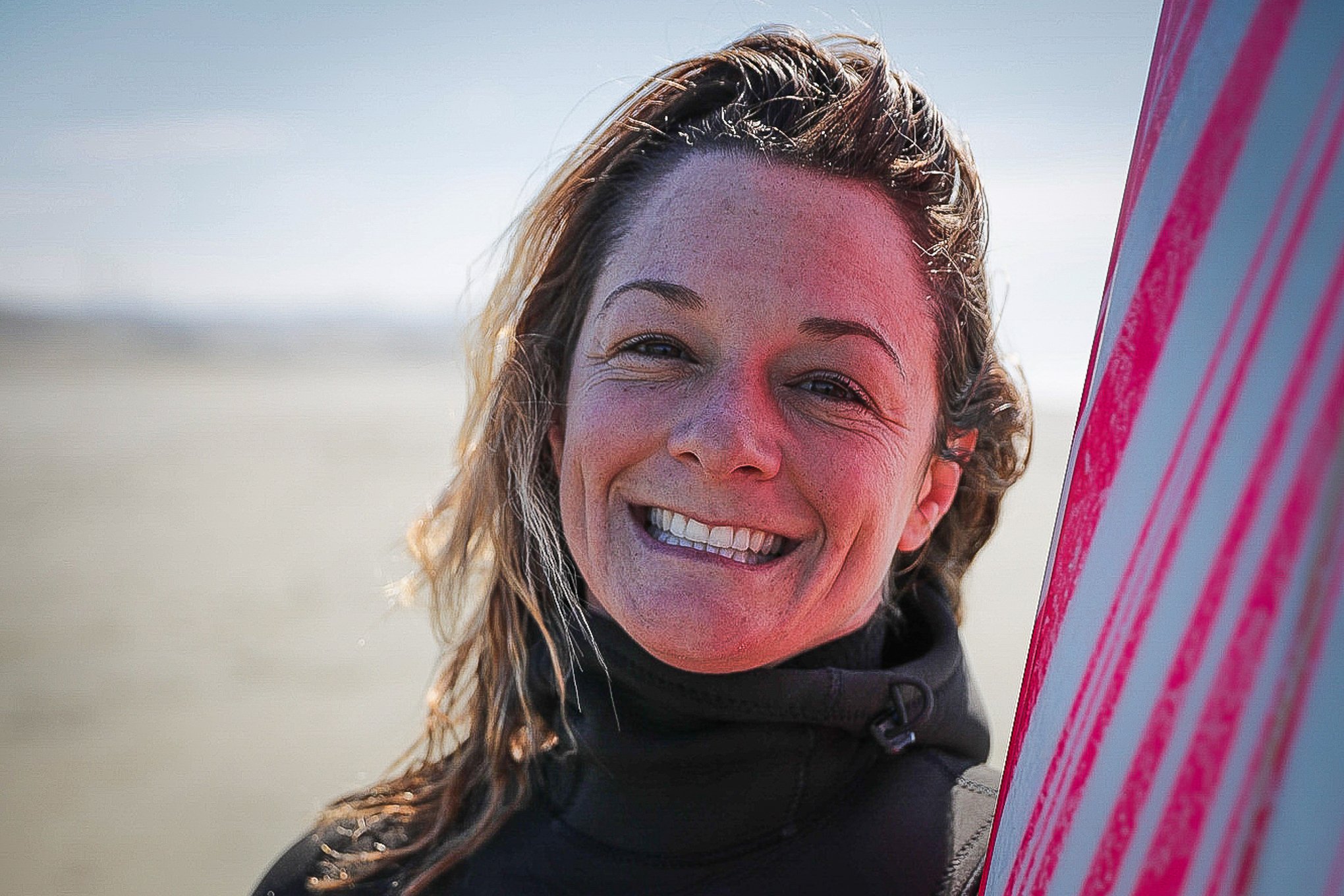
BIANCA VALENTI
Bianca Valenti is an elite big-wave surfer and proponent of gender equality in professional surfing who has inspired thousands of women to set aside their fears and paddle into the roiling ocean to surf.

When Bianca Valenti asked a shaper to create a surfboard for her to ride at Mavericks, the famed monster break off the shore of Half Moon Bay, he said he'd do so only if she promised not to die.
With her signature pink surfboard, Valenti became a fixture at Mavericks, previously a male domain until she proved her mettle on waves reaching 50 feet. Valenti was awarded this honor because of her prowess as an elite big-wave surfer, proponent of gender equality in professional surfing and inspiration to thousands of women to set aside their fears and paddle into the roiling ocean to surf.
At the time Valenti began competing in big wave surfing, there weren't female divisions, so she competed against boys and often won. As a teen, she won regularly but saw that women weren't being treated as serious competitors. This led her to successes in achieving gender equality in surfing and changing the sport for women, everywhere.
She is one of 11 women who compete in the World Surf League’s big-wave tour and has been at the forefront of creating opportunities for women outdoor athletes. This league competes at such legendary big wave venues as Puerto Escondido, Mexico; Pe'ahi, Maui, Hawaii; Mavericks, California; Nazare, Leiria, Portugal; and Haiku, Maui, Hawaii.
Valenti led the charge in 2018 to get women equal prize money as men in professional big-wave surfing. Outside Magazine named her one of the Most Accomplished Athletes in 2018 along with famed climber Alex Honnold (COHOF Class of 2020 member) and tennis champion Naomi Osaka.
Most recently, she finished on the podium at the 2021 XXL Big Wave Awards for biggest paddle of the year, is a two times winner of the Puerto Excondido Cup (2018. 2019) and was the first woman to win a big wave competition at Nelscott Reef in Oregon (2014).
She has been featured in the New York Times Magazine, PBS, BBC World News, and ESPN, among many other publications. Valenti volunteers with Brown Girl Surf to promote women and girls of color to become surfers. She is equally committed to ocean conservation as an ambassador for Save the Waves Coalition and Sustainable Surf. Valenti also founded the Better Wave Foundation that seeks to empower outdoor athletes by getting them healthcare, 401k and support.

GARY COE
Gary Coe is a top winning tournament fisherman, fishing instructor and ambassador for his sport. He is recognized for having spent 20 years enhancing fisheries through hatchery programs, educational scholarships and grants, promotion of ethical sportsmanship, tournaments, and youth development.

Gary Coe is a top winning tournament fisherman, fishing instructor and ambassador for his sport. He is recognized for having spent 20 years enhancing fisheries through hatchery programs, educational scholarships and grants, promotion of ethical sportsmanship, tournaments, and youth development.
To drive these efforts, he established the charitable non-profit Kokanee Power and built it to 1,200 volunteers who donate their time, money and energy toward making California freshwater fishing programs better for all anglers.
His fundraising generated over a half million dollars toward improving fish pens, kokanee egg collection and events. Along the way, he formed partnerships with the Department of Fish and Wildlife and many organizations to create the foundation to restore and enhance fisheries at many lakes across California.
Coe bought, delivered and donated food for ten independent projects to grow and release large trout, including at Shasta, Lewiston, Siskiyou and Collins. He developed partnerships with the U.S. Forest Service, which designed pens and the Mt. Shasta Rotary Foundation, which built three pens and set them in a single huge dock structure to grow trout to 4 to 7 pounds for release every April. Coe also has put together volunteers to assist in kokanee egg taking for CDFW at the Little Truckee River.
As an outdoorsman, he developed trolling methods to catch large kokanee, trout and salmon and fished at nearly every inland water in California. If the lake has large fish, Coe has fished it. His favorites include Shasta, Whiskeytown, Almanor, new Melones, Don Pedro, Shaver, Berryessa, Bass, Stampede, Tahoe, New Bullards Bar, Union Valley, Donner, Pardee and many others. He is a master angler at choosing rods and reels, rigging, downriggers and tackle selection per water.
There's no secret fishing hole with Gary Coe. He's an angler who doesn't hide what he knows. He is an ambassador for his sport, passing on his knowledge at sport shows and events across the state.
His enthusiasm is contagious with all who have met him. His nomination to the Hall read, “You leave with the faith that, as long as Gary Coe is involved, the chance of something special happening is just ahead." Asked why he has devoted his life to developing Kokanee fisheries, Coe said, “We do it to allow people, especially parents and their children, the chance to catch a fish of a lifetime that otherwise would be near impossible.”

JAY FAIR
“Stillwater” fly-fishing guide Jay Fair was a pioneer in the use of unique fly and conventional fishing tackle techniques. He created innovative, highly effective and simple-to-tie fly patterns, and was known as a champion of northeast California's Eagle Lake and its strain of rainbow trout. His innovations in fly fishing tackle have made profound impact on the sport, worldwide.

“Stillwater” fly-fishing guide Jay Fair was a pioneer in the use of unique fly and conventional fishing tackle techniques. He created innovative, highly effective and simple-to-tie fly patterns, and was known as a champion of northeast California's Eagle Lake and its strain of rainbow trout. His innovations in fly fishing tackle have made profound impact on the sport, worldwide.
When many people think of fly-fishing for trout, they invariably envision mountain streams with anglers making delicate casts to rising fish. But, there is another fly-fishing venue that is often overlooked: lakes and ponds, a.k.a. “stillwaters”. Perhaps no one did more to create awareness of this type of fly fishing (now growing in popularity world-wide) than did the late Jay Fair of Eagle Lake, California.
Growing up in the Great Depression, Fair learned to be a successful fisherman out of necessity to help feed his family. In the 1950's, he began fishing northeast California's large lakes including Lake Davis and Eagle Lake, near the town of Susanville.
He quickly became enamored of their big, hard-fighting trout and was soon an expert in the nuances of stillwater flyfishing. As Fair's reputation for phenomenal catches grew, he began guiding clients to this specialized form of angling. Along the way, he created special flies that were highly effective, yet easy for anyone to learn to tie, such as his “Wiggle Tail” which is a staple throughout the western U.S. Throughout his life he exhibited a willingness to share his tying recipes and techniques with the public.
Recognizing that not everyone could master the art of fly casting, Fair developed a method of trolling flies with conventional tackle so that even beginners could experience the thrill of catching an Eagle Lake rainbow. Thousands of anglers from all walks of life have benefited from his innovations.
Mr. Fair devoted much of his adult life to educating the public – as well as government agencies -- about the importance of Eagle Lake and its unique strain of trout, which can tolerate waters that are highly alkaline. Because of this ability, Eagle Lake rainbows are used to stock high desert fisheries throughout the West, providing recreational opportunities where none would exist.
In addition to fishing California's lakes, Mr. Fair ventured often to other stillwaters across the western United States – especially Montana – and once fly fished for six weeks straight in remote parts of Chile spending all of his time with locals, staying in their villages and teaching them to fly fish. Upon his return home, he told family members that he'd had “The time of his life!”

ALAN KALIN
Cyclist Alan Kalin changed the safety of American roads for bicycles by spearheading the effort to establish cycling turnouts on Mt. Diablo's Summit Road, the first major bike route in America to do so. The improvements have been applauded as a safety model for the nation.

Concerned that the 11-mile Summit Road to Mount Diablo - a world-famous cycling route - was being bloodied by collisions between cyclists and motorists, Alan Kalin advocated solutions that would allow vehicles to pass cyclists safely and make Mt. Diablo the first major mountain bike route in the nation to separate cyclists from traffic. His solution reduced collisions by 80%, saving lives, greatly reducing road rage and established a safety model for the nation, according to the California State Senate.
From 2010 to 2014, this route produced an average of 23 collisions per year, with many of Kalin’s best riding friends struck. It also frequently resulted in road rage showdowns between drivers and riders, according to State Park officials. After the first turnouts were created, collisions dropped to 3 accidents in two years and road rage greatly diminished.
The Hall of Fame nomination stated that Kalin helped build an organization of 1,500 members, raised funding at $15,000 to $20,000 for each turnout, and worked with legislators to help convince and obtain funding for State Parks to also add a new double yellow line on the summit route, add road sign placement throughout the park, create “Sharrows” and heavily convince cyclists to ride single file instead of stacking up three and four across.
The California State Senate described Mt. Diablo's Summit Road as the first major bike route in America to create cycling turnouts, as well as signage and lane markers to keep cyclists and vehicles apart and safe from each other, and described the improvements as a safety model for the nation.
Kalin has had a lifetime of philanthropy. He served as a volunteer for the Peace Corp in Ethiopia as a famine relief worker and instructor, and after that, worked 30 years as a high school teacher and a military officer in the U.S. Army. He then helped develop or facilitate a free real-time weather app for state park visitors, Eagle Scout bike repair boxes along major riding routes, pothole repair teams, and other mainstream projects.
As an avid cyclist and traveler, Kalin has ridden thousands of miles across the backroads of the Bay Area and across much of the state and driven and explored most all parks and recreation areas. From behind the wheel, both in cars and on bikes, he saw and felt firsthand the conflict and anger between drivers and riders unable to share the same space on narrow roads. Kalin then made it a mission to provide a template to solve this conflict at Mount Diablo.

JESSIE BENTON FRÉMONT
Yosemite National Park, indeed the entire National Park System, might not exist today were it not for the influence of Jessie Benton Frémont. She used her influence with President Abraham Lincoln to convince him to protect Yosemite in 1864, the first public land on Earth to be preserved for public enjoyment.
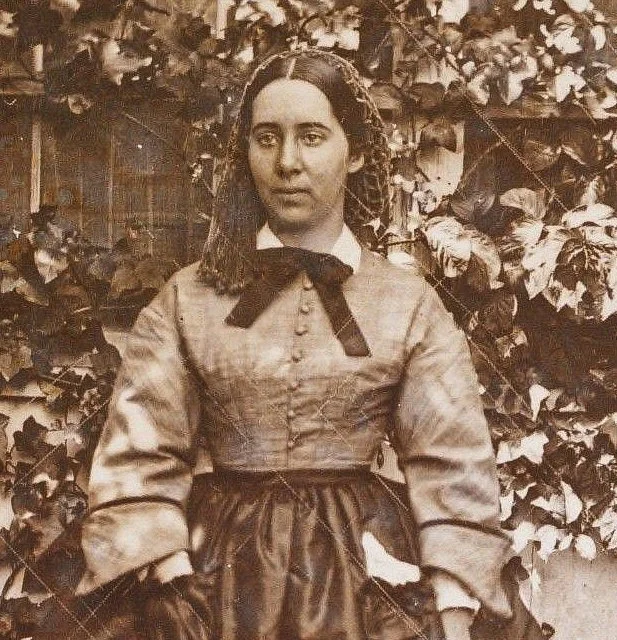
Yosemite National Park, indeed the entire National Park System, might not exist today were it not for the influence of Jessie Benton Frémont.
Married to John C. Frémont and the daughter of the most influential Democratic senator of the mid 1800s, Thomas Hart Benton, she influenced such luminaries as Horace Greeley, Thomas Starr King, Richard Henry Dana Jr. and U.S. Sen. Edward Baker to join Galen Clark and Sen. John Conness in urging Congress to set aside Yosemite and its Giant Sequoias in what comprises the heart of Yosemite National Park, today.
In 1864 at the height of the Civil War, she traveled to Washington, D.C. with photographs of Yosemite Valley that she’d commissioned Carleton Watkins to take and personally entreated President Abraham Lincoln (they knew each other well), to save Yosemite and the Mariposa Grove of Big Trees by signing The Yosemite Grant, the first instance of land being set aside specifically for its preservation and public use by a national government. It was an extraordinary idea, proposed in extraordinary times, in part by an extraordinary woman.
Pulitzer Prize-nominated journalist and historian Craig MacDonald asked, "If not for what she did behind the scene (during an age when women did not have the vote or any voice in public life), would there be a Yosemite National Park today, would John Muir have been drawn to the Valley because of the attention given it by its protection, would there have even been the foundation necessary to lead to establishing national parks?"
The Yosemite Grant set the foundation not only for the national parks, but for the California State Parks, as well. Still today, the words "Since 1864" are inscribed on the California State Parks symbol, a reminder of what this California heroine helped set in motion.
Before her work to protect Yosemite, Jessie Benton Frémont grew up on the frontier in Missouri and was the pen behind John C Frémont's widely read reports of his western expeditions. She followed that up with best-selling stories of his adventures that made her and her husband mega stars in their day. Her words inspired hundreds of thousands to venture west. No female writer in American history had a greater formative influence on America's view of California. She was prolific throughout her life, writing A Year of American Travel about her 1849 trek to California and regularly contributing to national magazines. Through her writings, she added an early feminine voice to the history of California's outdoors. Jessie Benton Frémont is buried in Los Angeles, her adopted home.

HEATHER ANDERSON
Heather Anderson is the only woman who has completed the Appalachian, Pacific Crest and Continental Divide National Scenic Trails each three times. She has influenced thousands through her treks and writings.
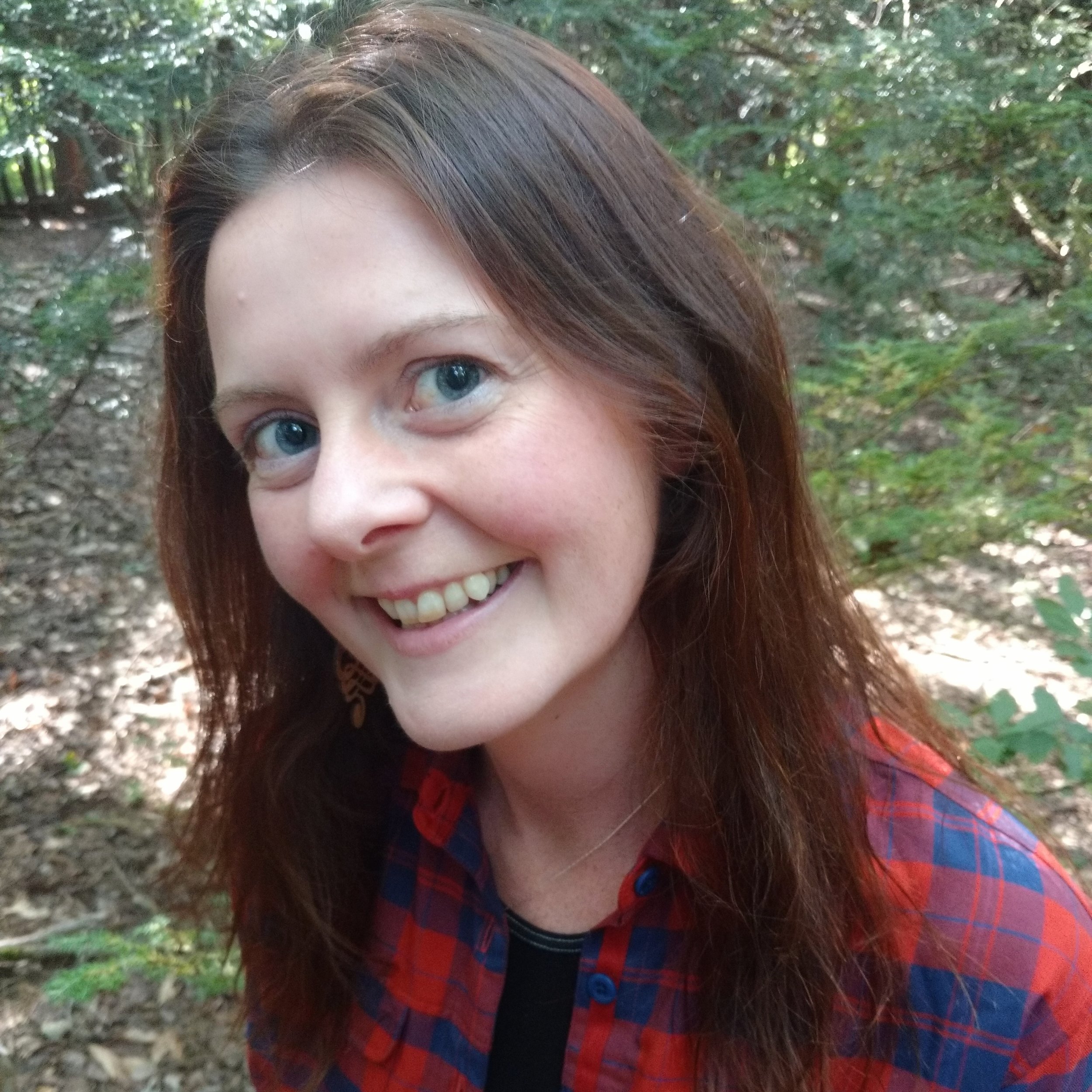
National Geographic Adventurer of the Year, Heather Anderson is the only woman who has completed the Appalachian, Pacific Crest and Continental Divide National Scenic Trails each three times. This includes her historic Calendar Year Triple Crown hike in 2018 when she hiked all three of those trails in one March-November season, making her the first female to do so.
She holds the overall self-supported Fastest Known Time (FKT) on the Pacific Crest Trail (2013). She also holds the female self-supported FKT on the Appalachian Trail (2015), and the Arizona Trail (2016). She has logged over 40,000 foot-miles since 2003 including 15 thru-hikes and many ultramarathons. She is also an avid mountaineer and peakbagger working on several ascent lists in the US and abroad.
As a professional speaker, Heather speaks regularly about her adventures and the lessons learned on trail. She is the author of Thirst: 2600 Miles to Home (2019) chronicling her Pacific Crest Trail record and Mud, Rocks, Blazes: Letting Go on the Appalachian Trail (2021) about her 2015 AT record. She also co-authored a guide to long-distance hiking preparation with Katie Gerber called Adventure Ready: A Hiker’s Guide to Training, Planning, and Resiliency (2022). You can find her online at wordsfromthewild.net or follow her on Instagram @ _wordsfromthewild_

BILL JENNINGS
Bill Jennings labored in the trenches of state and federal water rights, water quality, and fishery permitting processes for nearly four decades. He authored myriad comment letters, protests, and petitions and frequently testifies in evidentiary proceedings and generated millions of dollars for restoration projects.
Arriving in California in the early 1980s, Bill Jennings founded the Delta Angler and quickly became involved in protecting fisheries.
He has labored in the trenches of state and federal water rights, water quality, and fishery permitting processes for nearly four decades. Bill has authored myriad comment letters, protests, and petitions and frequently testifies in evidentiary proceedings. He manages an aggressive enforcement campaign that has generated millions of dollars for restoration projects.
Following a massive fish kill, Jennings co-founded Committee to Save the Mokelumne and served as its Chairman. He has Chaired the California Sportfishing Protection Alliance since 1988 and been its Executive Director since 2005. Between 1995 and 2005 he served as Delta Keeper. He is a Board Member of the California Water Impact Network and was one of the original founders and Board Member Emeritus of Restore the Delta.
Bill has received numerous acknowledgments including the International Conservation Award from the Federation of Fly Fishers, the Director's Achievement Award from the Department of Fish and Wildlife, the Conservation Achievement Award from the California-Nevada Chapter of the American Fisheries Society, the Quality of Life Award from the Land Utilization Alliance, and the Delta Advocate Award from Restore the Delta. The Outdoor Writers Association of California recognized him as Outdoor Californian of the Year and the Delta Fly Fishers selected him as Fly Fisherman of the Year. His efforts in obtaining an historic cleanup of Penn Mine on the Banks of the Mokelumne River led to awards by California Water Policy IX Conference.