BIOGRAPHIES
Dale Bard
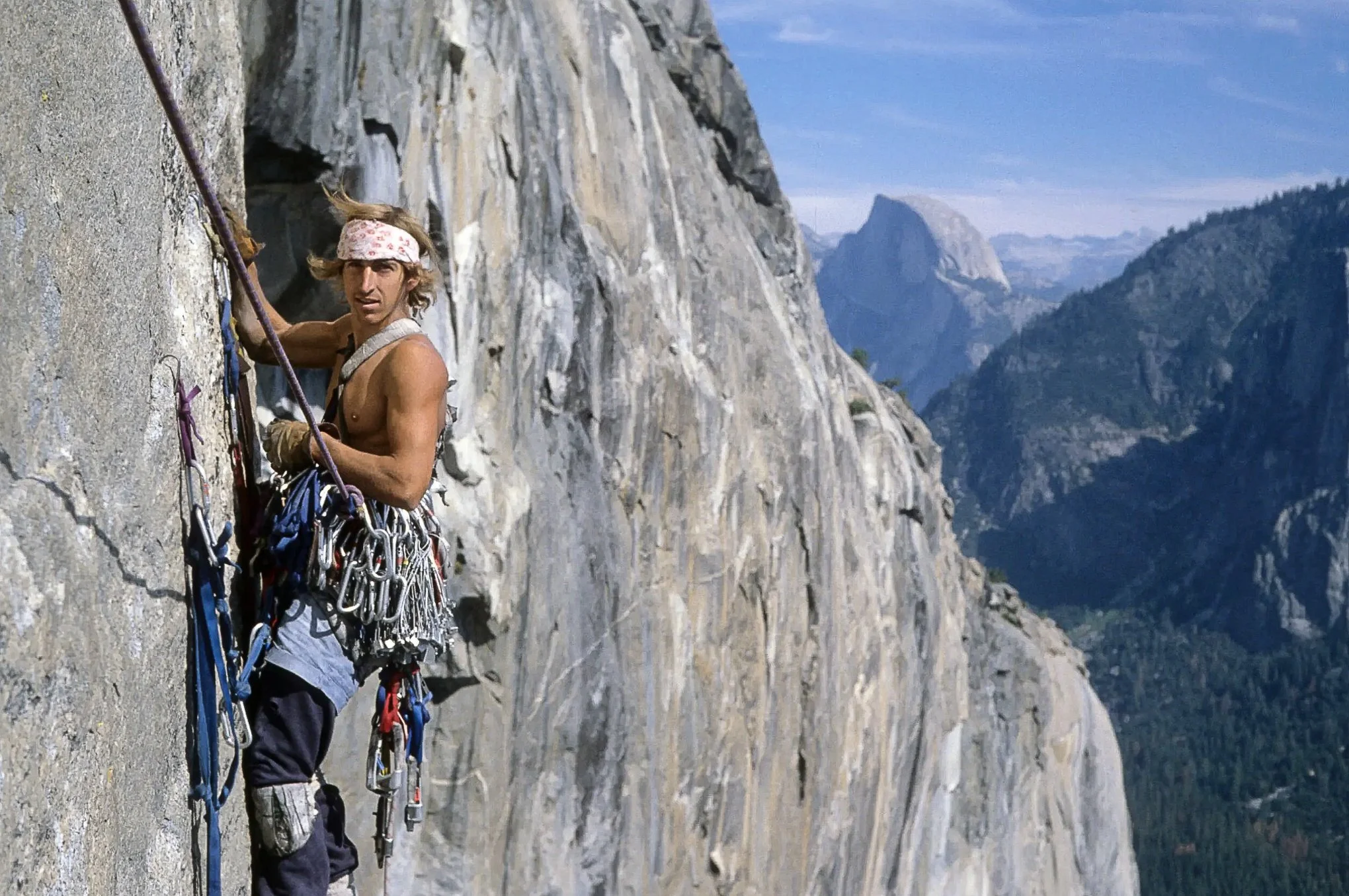
A key figure of Yosemite’s “Stone Master” era, Dale Bard pushed the boundaries of big-wall climbing, becoming known as the “Crack Master” for his breathtaking ascents.
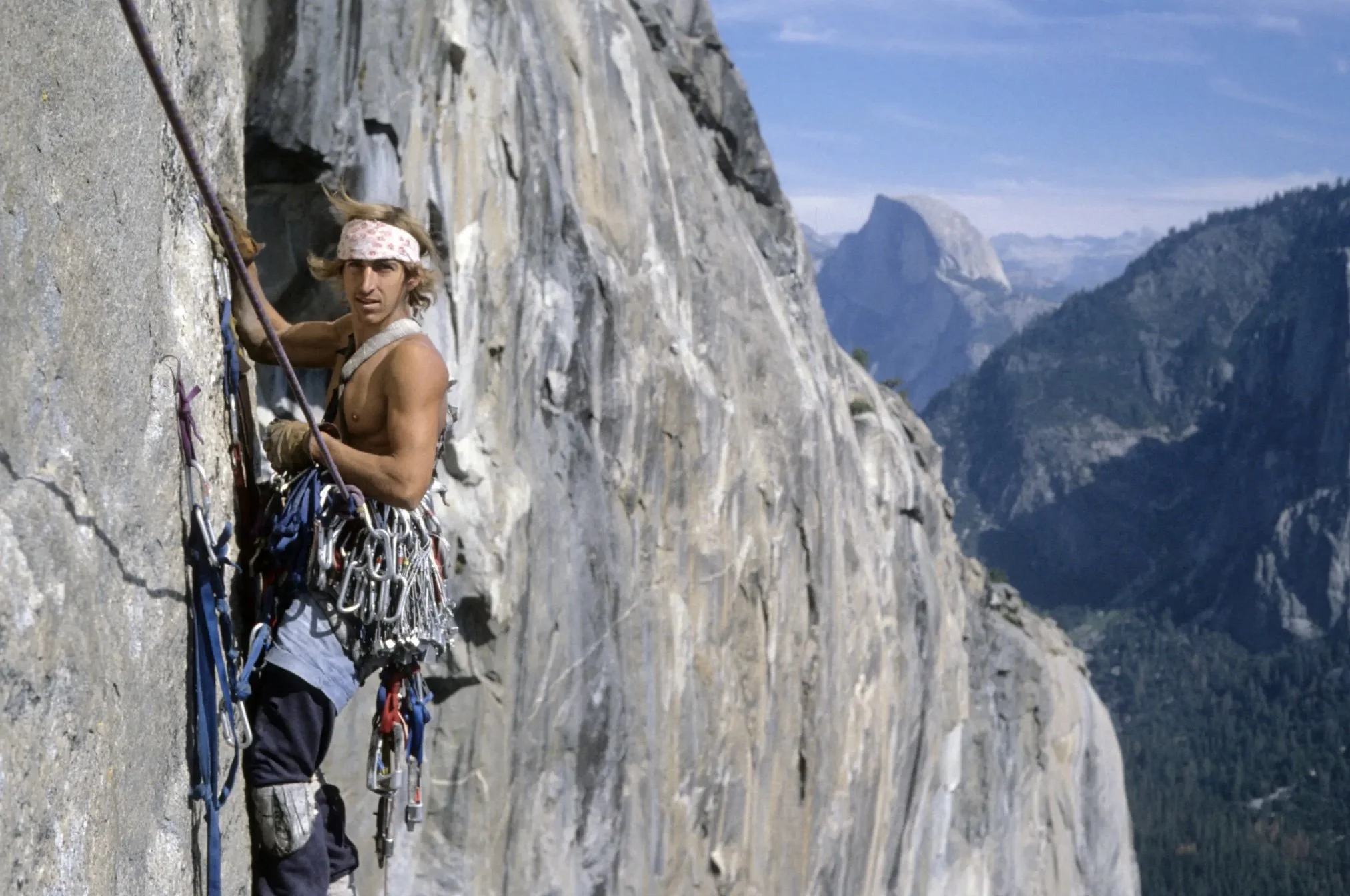
Dale Bard, Stone Master
Dale Bard first rappelled at the age of 14 through the Southern California Falconry Club. That sparked a life-long love of climbing.
He became one of Yosemite’s pioneering rock climbers, known for pushing the boundaries of free climbing and for big wall climbing in the 1970s and ‘80s. He was a key figure of Yosemite’s "Stone Master" era, established numerous first ascents and is remembered for his skill, minimalist lifestyle and mentorship of other climbers.
So committed to climbing was Bard, that he lived for an entire Yosemite season on fifteen borrowed dollars, demonstrating that a “simple climbing life was possible.” Many of Yosemite’s climbing pioneers lived seasonally as one of Camp 4’s ”dirtbag climbers” (individuals who lived out of their cars and tents in order to climb as much as possible, as described in Wikipedia).
While he did not promote himself, Dale was a kind and welcome ambassador to the outdoors. At Camp 4, he met with uncounted numbers of the millions of visitors to Yosemite, sharing his love of climbing and inspiring thousands to enjoy the outdoors. From across America, many children, for instance, invested their time at local climbing gyms, trying to be “just like Dale.”
Climbers talk often of “standing on the shoulders of giants.” In Yosemite and beyond, Dale Bard was one of those giants—not always the loudest voice, but one whose presence, style, and determination helped shape a generation. He is remembered as one of America’s greatest climbers, so highly respected among climbers that they called him “The Crack Master.”
Climbing achievements
A pioneer in free climbing. Dale was instrumental in shifting Yosemite's focus toward this style. He established many difficult free and aid routes, including the first ascent of Blind Faith, On the Rostrum, was part of the first ascents of significant big walls such as Sea of Dreams, Bushido and Sunkist, and established classic bouldering problems like High Plains Drifter. With Dave Diegelman and Jim Bridwell, he led the ascent of Sea of Dreams on El Capitan, considered to be the hardest-ever aided route (27 pitches, 39 drilled holes). His early efforts helped “free the Nose on El Cap,” before such an idea seemed possible.
Epic expedition
Dale embodied endurance and grit. In 1976, he and Nadim Melkonian completed the first 250-mile Sierra Crest traverse in mid-winter, enduring 44 days in which they faced storms, avalanches, and near starvation, but pushed through with sheer resolve.
Closing the gap
Bard was closely tied to the Stone Master era, bridging the gap between free climbing progress and big-wall boldness. He even appeared in the iconic film Moving Over Stone, capturing the spirit of that time.
"Dirtbag" ethos
Bard embodied the "dirtbag" climbing lifestyle, living simply and often in a tent. He was known for surviving off very little money. This commitment to living on his own terms made him an inspiration to many, especially those he met and inspired at Camp 4. To fellow climbers, the term “dirtbag” was not pejorative, but inspirational, describing someone who would sacrifice personal comfort and a career for his sport. It became akin to monastic mountaineering.
Mentorship
Dale was a significant mentor to many younger climbers, including legendary climber Randy Leavitt who credited Bard with providing a turning point in his own career. Climbers remember him for setting a high bar as a partner and for his calm, supportive nature.
Later life
Dale Bard continued to be involved in the climbing community throughout his life, even after he moved away from Yosemite.
He lost his battle to cancer at age 71, on October 1, 2025, in a Moab hospital, yet his name is invisibly etched along the climbing routes he pioneered on the big walls of California’s Yosemite National Park.
Block and Tackle, First Ascent https://www.youtube.com/watch?v=2YncbLeXjD8
Original Stone Master - The Crack Master https://www.youtube.com/watch?v=xquzLfQ4Cio&t=375s

ALEX HONNOLD

He gained world renown for the rescue of COHOF Class of 2021 member Emily Harrington on El Capitan and the featured climber and starring role in the Oscar-winning documentary feature “Free Solo.” In the world of big wall climbing at Yosemite Valley and elsewhere, Honnold has long been held as one of the world’s best for free solo ascents (without ropes).
He is the only person to free solo El Capitan in Yosemite National Park. In 2012, Honnold and Hans Florine (COHOF Class of 2016) set the record time on the Nose route on Yosemite‘s El Capitan, which he later broke in 2018 with Tommy Caldwell. Honnold’s first free solo ascent of El Capitan in 2017 has been described as “one of the great athletic feats of any kind, ever,” and became the foundation for “Free Solo.”
He has appeared in many other films and television shows, including “60 Minutes,” and broke the barrier to bring the world of climbing into the homes of millions. His achievements include all the big walls of Yosemite, at Zion National Park in Utah, the Horseshoe Wall in Arkansas, and far beyond in Patagonia and the Czech Republic.

EMILY HARRINGTON
Emily Harrington, Truckee, is one of the most successful and versatile professional climbers in the world. She also has inspired countless thousands through appearances on national television shows and national media, where she shared her story of overcoming hardship with the support of her dad, and then bonding amid the outdoor experience.
This past November, Harrington became the first woman to free climb ‘Golden Gate’ on El Capitan in under 24 hours, making her the 4th woman in history to free climb El Capitan in a day. If elected, she would be the second Hall of Fame member to have summited Mt. Everest. She’s a five-time US National Champion, has completed numerous first female ascents of 5.14 routes, and made a complete ski descent of Cho Oyu - the world’s 6th tallest peak.
She also gained national attention that has inspired families across America. After she had a near-death fall at El Capitan, and her father, Tim, 64, faced high-altitude edema issues, the father-daughter team supported each other to climb 18,996-foot Mount Cayambe in Ecuador. The story landed them on television shows across America and inspired parent-child connections in the outdoors to bond and move forward under hardship.
Emily called this her greatest personal victory: Surviving the fall at El Capitan and then climbing Cayambe with her dad. “We’ll always be connected for life.”
Emily satisfies the two requirements of all Hall of Fame members: A paramount scope of adventure – she is among the world’s preeminent climbers; and has inspired thousands to take part in the outdoor experience, especially parents and their children.

NORMAN CLYDE

This 20th-century mountaineer (1885-1972) achieved more than 130 first ascents, many in California's high Sierra and Yosemite. He set a speed climbing record on Mount Shasta in 1923, where he climbed from Horse Camp (at 8,000 feet) to the summit (14,179 feet) in 3 hours and 17 minutes. In 1925, he completed 53 climbs in the Sierra Nevada. Clyde has 1,467 articles archived at the Bancroft Library at the UC-Berkeley. He was a guide, naturalist and author.
"In my 80s, I still prefer to sleep outside at my ranch house, in my sleeping bag, not a bed," said Clyde, according to the Bancroft Library.
In 2018, Tapon returned to his California home after a series of expeditions in which he hiked 10,000 miles, including 2,000 miles across Madagascar, and climbed 50 of 54 of Africa’s highest peaks. Tapon has traveled to more than 100 countries and has written two books, “Hike Your Own Hike,” from 2006, and “The Hidden Europe: What Europeans Can Teach Us,” in 2012.
“The whole five years in Africa, it cost me $110,000,” he said. “It’s a lot of money, it’s true, but a lot of people could afford to do this if they wanted to. I camp, I live simply, buy street food. My biggest expense was a reliable 4x4 pick-up truck to get around Africa.”

GALEN ROWELL
Rowell, a photographer and trekker, mastered an ability to capture unrepeatable moments in the outdoors on film, and with it, won world renown for his celebration of the natural world and its beauty. He supported many Bay Area conservation groups and conferences by donating his Mountain Light photo gallery as a base for meetings and conferences.
Rowell made his first roped ascent in Yosemite Valley at age 16, the first of more than 100 new climbing routes in the Sierra. In the years that followed,
Rowell extended his adventures to the world's highest mountains on all seven continents. These included the first one-day ascents of Denali in Alaska and Kilimanjaro in Africa, and the highest summit ever gained on skis in history, Mustagh Ata, 24,757 feet, in China. He also completed a landmark 285-mile cross-county ski traverse of the Karakoram Himalaya in winter.
He captured moments from these and many other expeditions in magazines and large-format books, including the best-selling "Mountain Light," and "Bay Area Wild." Rowell and his wife, Barbara, a pilot and accomplished trekker died in a plane crash in 2002, following his induction to the Hall.
A personal glimpse: "What I do is a continuing pursuit in which the art becomes the adventure, and vice-versa."